I’ve been considering getting MySudo or some other sort of extra phone number, but at the pace Proton seems to be expanding their product line, I’m tempted to just hold off a couple months and see if those don’t release Proton Voice or something like that.
1 Like
It’s not out of the realm of possibilities. Proton has always considered itself the private and secure version of the core Google suite. So, this I’m willing to bet is indeed on its way but not anytime soon. In the next 2 years is my bet at the earliest but I’ll be happy to be proven wrong.
I dont think they would launch MvNO / VOIP service anytime soon as it is technically very difficult, if possible at all, to run a privacy friendly MVNO / VOIP service.
They will need to have access to cell network infrastructure to reduce the level of logging, and I dont think they would want to run servife based on Chinese infra, that means they might require the operaters not to use ZTE / Huawei equipment.
Yet they will be required to retain / log plenty of information as required by many different countries for LE purposes.
2 Likes
I had more searching on this LIveKit. Seems also the French government uses this for their video calling solution. https://visio.numerique.gouv.fr/
5 Likes
That’s interesting. I’m fairly new to this space so I didn’t consider that. It just feels like every month there’s a new Proton Something, and I figured it would jut be a matter of time!
A few practical things popped up during testing on macOS Sequoia, Linux Mint 22, and Windows 11 Enterprise:
-
Screen sharing: no system audio option — kills demos and video walkthroughs.
-
Meeting links: a single-digit typo drops you to the splash page; if you’re logged into Proton it can sometimes spawn a new meeting. Confusing and a privacy/UX edge case.
-
Access controls: no meeting lock / waiting room / or password option — anyone with the link can join.
-
Host identity (clarified): if you are not signed in, Proton assigns an anonymous identifier which shows in the meeting. If you are signed in, you can set your display name in-meeting — but Proton also shows the Proton account username and the associated email in the top-right while hosting. That email being visible is odd — showing the account name is fine, but the email shouldn’t be displayed prominently.
Anybody else see these issues or know whether a feature roadmap is coming? Since Meet is built on LiveKit, do these gaps look like LiveKit limits (esp. screen-audio) or product choices by Proton? It seems to me like everything but the audio issue can be fixed as part of LiveKit’s SDK.
1 Like
FYI all, Proton Meet got back to me about the bug reports and suggestions and so I figured I would share here as well:
Hello,
Thank you for contacting us and for the feedback provided, I have shared your feedback with our dedicated team.
Our team is still working on improving the Proton Meet service since it is in the early release, and if you are able to, please test out Screen sharing with another browser/incognito mode to see if that will help.
When it comes to the links, invite links have an expiration time. Typically, within 30 days for scheduled meetings and much quicker for instant meetings. The personal meeting link is the only one that does not expire, and for the password, a password is automatically generated for your meetings, which is visible in the invite link. For scheduled meetings, you also have an option to make the meetings even more secure by setting a passphrase.
Also, the features you requested might be implemented sometime in the future, thank you also for taking the time to request them.
Looking forward to your reply.
Kind regards,
Jakjim
Customer Support
Proton VPN
4 Likes
Any information on what is the highest resolution it’ll support? I know 4K may be overkill, but I live in a city where broadband is relatively cheap and I have no data cap. So in this context, I want the highest quality possible and I’m not worried about data usage or even latency as I’m using gigabit fiber.
I ran a quick browser check and Proton Meet is publishing simulcast layers (180p / 360p / 720p). My browser decoded the stream at 1280×720 (readyState 4). Network stats show 0 packet loss, very low jitter, and ~30 ms RTT — so on my 8 Gbps XGS-PON dual-WAN setup the video and screen-shares are crystal clear at 720p. Keep in mind Proton Meet uses adaptive simulcast, so viewers with weaker upstream/CPU will receive a lower layer.
Hope that addresses your question. 
4 Likes
Any one else suspicious on how Proton is able to do so much in so little time? It starts me thinking about their funding sources, and that makes me distrustful; assuming I can be somewhat paranoid, like we are on here 
Some might argue they are not doing enough when it comes to their existing products lol
4 Likes
Suspicion’s healthy in the privacy space, but “they move too fast” isn’t much of a smoking gun. I actually sat through Proton VPN’s Linux app rewrite — that dragged on for a year and a half. Proton absolutely has its slow days.
What has changed is Proton itself: they’re not just a scrappy email startup anymore. Enterprise contracts, corporate adoption, and a steady influx of paying users have let them hire aggressively and expand teams across products. That’s what makes the rollout cadence look quicker.
Proton is slow only for Linux from what I can tell. Linux is not as prioritized but still put in the quality effort necessary to make any app on it well so that’s why it takes time. Also, Linux’s fragmented nature doesn’t help so that’s another reason.
Slow days yes, but there are legitimate reasons for it.
cries in macOS tears
Point is, ifs not just Linux, it’s years and years waiting for feature parity across devices with fragmented experiences on Windows, macOS, Linux, iOS, and Android.
Still, I love Proton.
2 Likes
While I would love to have feature parity, I think the reason it’s difficult is because the OS itself is different. I still feel there’s a reason for it.. but for the most part, for all that ProtonVPN is on all platforms, it works well and I am personally okay with it.
More than a year back Proton CEO said, they do things in phases:
- Phase 1. Release new products
- Phase 2. Release new features for existing products
After many product releases last year, he said they won’t be releasing new products for a bit (and improve existing), and this is what they did for a year:
- 2024 spring-summer: they released many products.
- 2024 autumn - 2025 spring: they improved existing with feature roadmaps
- 2025 summer: they released many products again
Because, he said, some people want new products, others want new feature upgrades.
I am in the camp, which want new products, because I get a lot more value this way, rather than minor feature improvements 
2 Likes
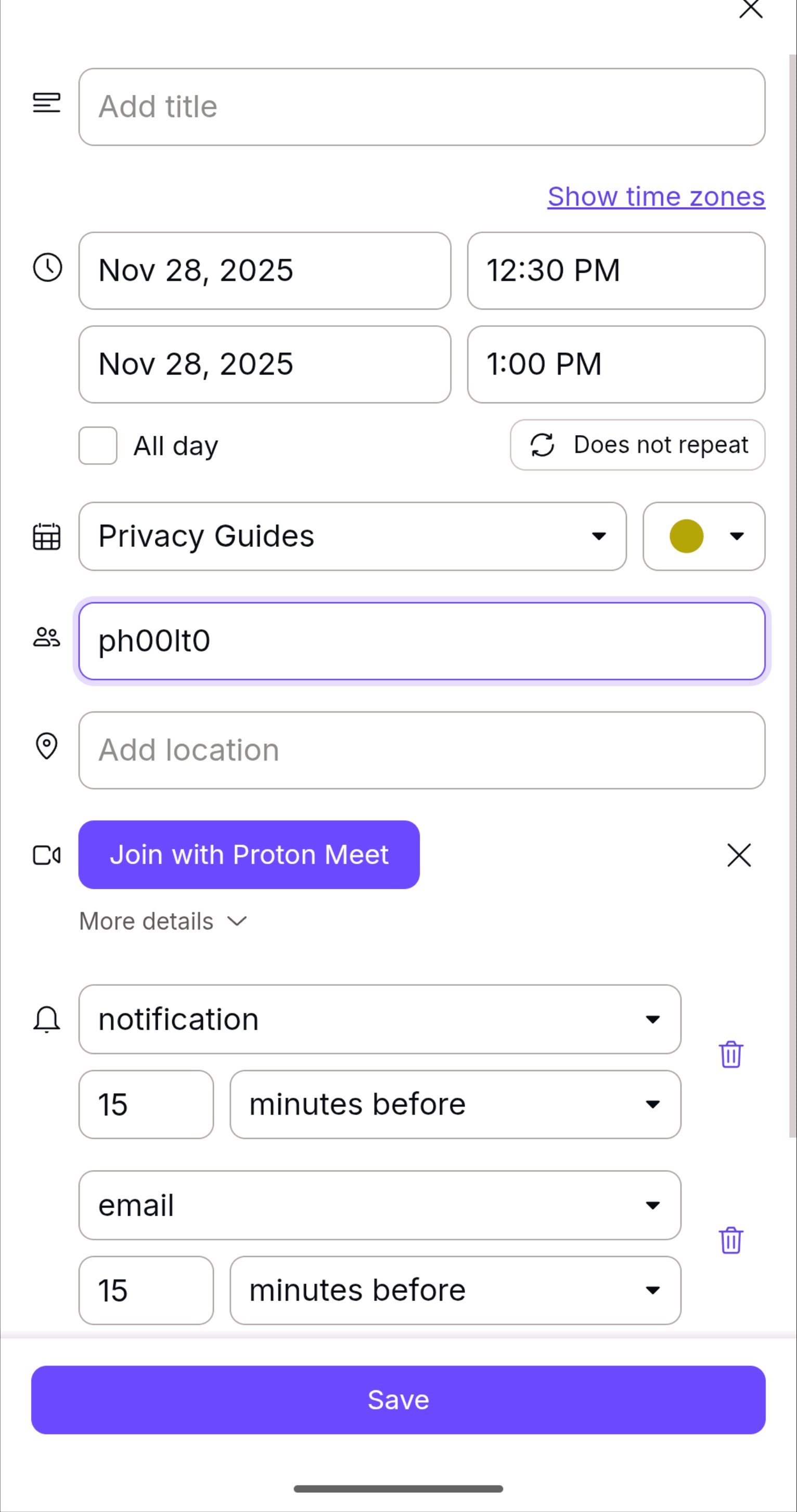
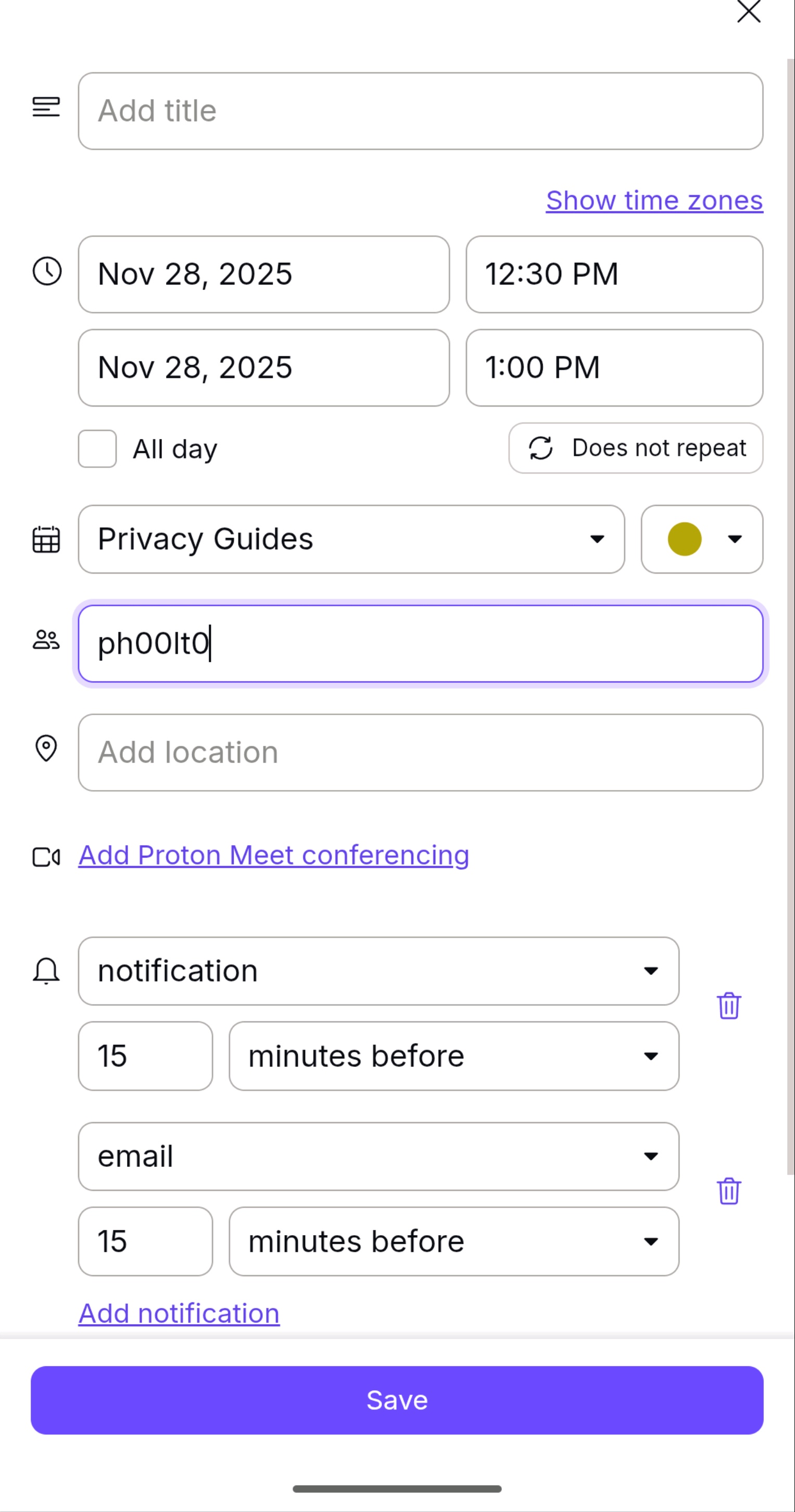
Seems not accessible by Proton Family users yet.
Would be a nice place for a quick call rather than some self-hosted public instance indeed. I guess it also depends on the quality/screen share call quality VS Signal.
Guess we’ll be able to compare soon enough. 
2 Likes
Can you check again? Seems like it is available to all now.