Verdict
It may come at a cost, but Android’s flexibility is what draws many people to the platform. While iOS’s tightly controlled and integrated approach provides a more secure experience for most casual users, there are advantages to Android’s more open model.
Flexibility creates more room for misconfiguration, but it’s not inherently insecure. In the right hands, it enables transparency, customization, and resilience — all of which can be genuine security strengths.
Final verdict: Android vs. iOS — which OS is more secure?
For the average non-technical user buying a mainstream device and leaving it on default settings, iOS has the clear edge. Apple’s tight hardware–software integration, uniformly enforced secure boot chain, consistent update delivery, and controlled app ecosystem reduce fragmentation and minimize user-driven risk. The result is a smaller attack surface and faster patch adoption across the entire ecosystem.
However, Android is not inherently insecure. Where it falls down is in the lack of consistency across its hugely diverse ecosystem, which results in a significant variability over update timelines, hardware security implementations, and long-term support. iOS avoids much of this through strict vertical control, creating a consistently secure experience across all its products.
But on well-supported devices (particularly flagship models from major vendors and Google’s own Pixel devices), Android’s core security architecture is highly robust, providing protections that can match those of iOS. And for technically sophisticated users with specific threat models, Android can be configured in ways that exceed those of iOS.
In other words: grass is green.
The article is still informative for the color blind.
I took this seriously for about 10 seconds until I saw this:
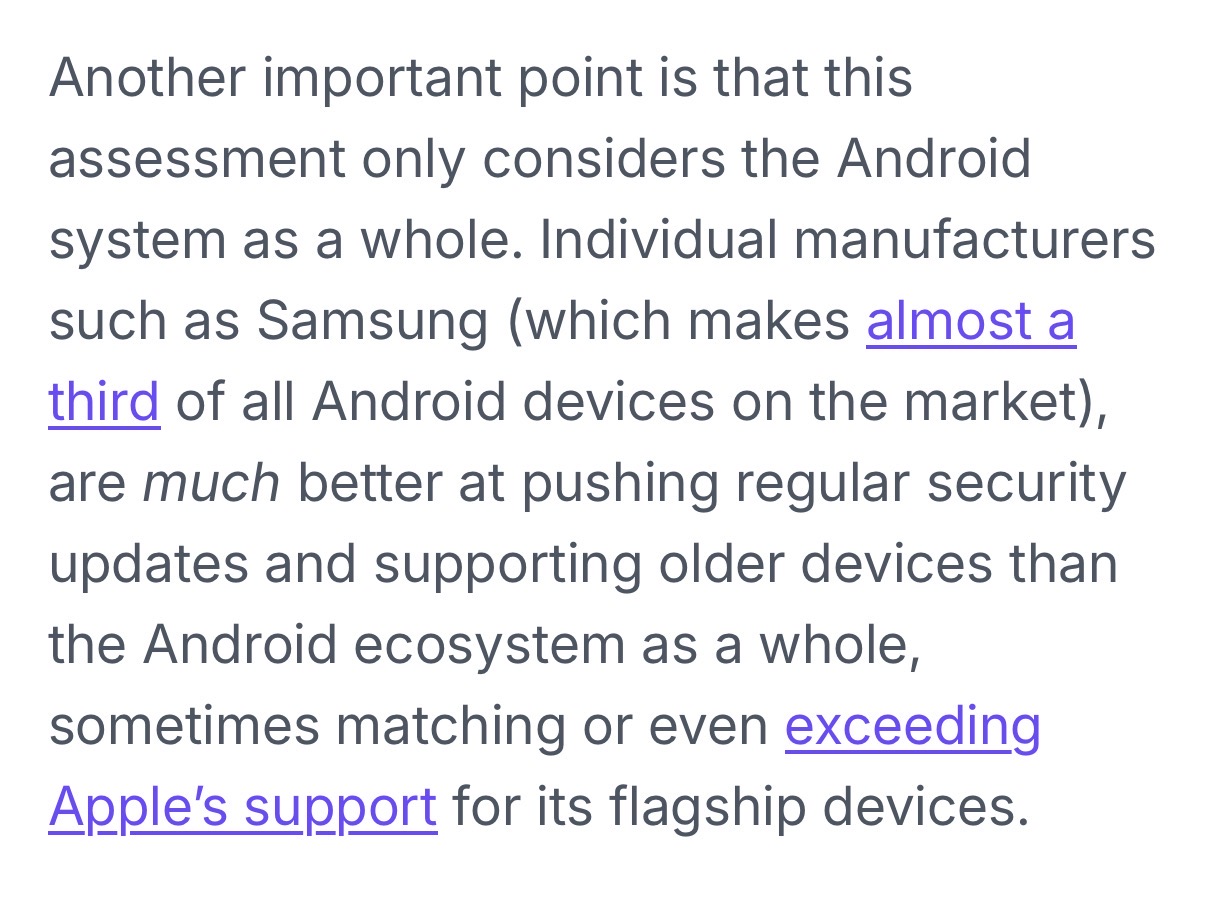
A quick search would’ve told them Samsung has previously delayed major OS updates by several months, and their devices often receive only quarterly or biannual security updates after a few years. Someone at Proton needs to tell the marketing team to get it together. Or they need to hire writers who know how to use a search engine.
Proton taking a page out of tuta’s book
Cellebrite was breaking into Samsungs like cake when I was in the forensics scene 2 years ago. None of the security updates mattered. Not sure what the deal is now.
Huawei
Huawei hasn’t been using Android for years now (though their new platform remain largely compatible with Android apps)
Reference
Lumo (Version 1.3) [Large language model]. (2025). Proton. lumo.proton.me