It doesn’t even have WiFi 7 enabled. Really, it was the 10Gb, 4×2.5Gb, and 4×1Gb ports, plus the more powerful hardware, that sealed the deal. Of course, this should also be future-proof for a long time, since I tend to upgrade my devices often anyway.
What definitely also played a part was that it has a familiar OS I’ve used for a long time, so there’s no learning curve. So the Flint is surely a great router too!
If you have the networking around 10Gb then it might be an upgrade if you use the actual bandwidth usage downstream indeed.
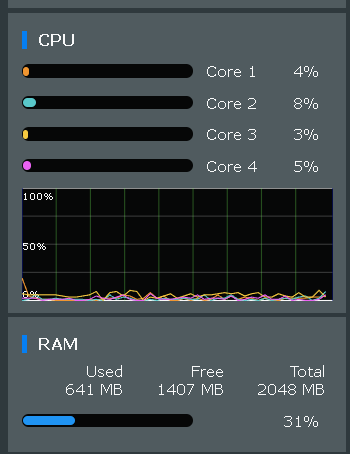
For the more powerful hardware, I guess it matters on what you do have running on it but I hardly see a router being used at 90% of the CPU haha, 10% at best.
When it comes down to cooling, maybe some potential throttling but again, the non-SFP ports do better on that regard if you use copper because of the heat it generates.
In routers, I am not sure how much of it is true because of the fast iterations but you could indeed use the Asus down the road as an AP while upgrading your router yes.
That is probably why you actually prefer the Asus one.
I’m not sure how maintained/more or less secure OpenWrt vs MerlinWrt are in comparison but I for sure wouldn’t trade some hardware for a familiar UI especially when this one can be fully custom with some custom CSS and the help of some LLMs.
But hey, I guess that the router is still quite more secure than a regular Asus router and won’t end up being part of the usual botnet Asus is so well-known for.
I personally still see it as an over-priced (ROG premium) kind of Asus thingy.
Hopefully you will never need to RMA it too.
That OS thing is definitely true. Since I flashed Merlin onto this right away, all the bloatware was disabled. The VPN features have also improved a ton, which makes projects a lot easier. And since I already know how to do pretty much everything securely, the only reason to buy a new one was that it was so close to EOL that I had to upgrade.
I also started a business a week ago, but I won’t go into that any further.
Finally got everything working right. The 5 Wireguard clients and 20 customers on them are barely noticeable. It got a bit overkill when all the IoT devices are also on multi-hop, plus Hagezi Ultimate and IVPN Hardcore Mode on top. Total traffic probably dropped 60-80% because of them, but it works perfectly locally. I’m really happy with the device now that I’ve learned how to use everything properly.
As expected yes.
A networking stack will always consume less resources than your average JavaScript website nowadays while achieving much more at the same time.