Votes are public. Besides the official website of the parliament, they get tracked more conveniently on mepwatch.eu or on howtheyvote.eu.
I don’t have a link yet, but they should update soon and I will add one.
Dumb question maybe, but when they say they scan “communication”, what is that actually referring to? Is it just person-to-person chats? Or also forum posts, comment sections or what else?
Read the bill to understand that it subjects companies to implement more processes and spend more money. Showing proof of intent from a press release pictures is certainly a choice. I doubt that Google and especially Apple wanted this, only Zuckerberg’s sister could’ve influenced him so it’s 1/3 for me.
I have only linked MEP Sonneborn’s post on X and translated it to closely resemble its tone while being mostly verbatim.
Sure, companies would spend more money, but are also enabled to source more data from this.
Before, they were not allowed (i.e. not only not financially incentivized), and now they can do it on a voluntary base.
As it stands, everyone of them is affected; Google with Gmail, Apple in at least parts of iMessage and Meta with Facebook.
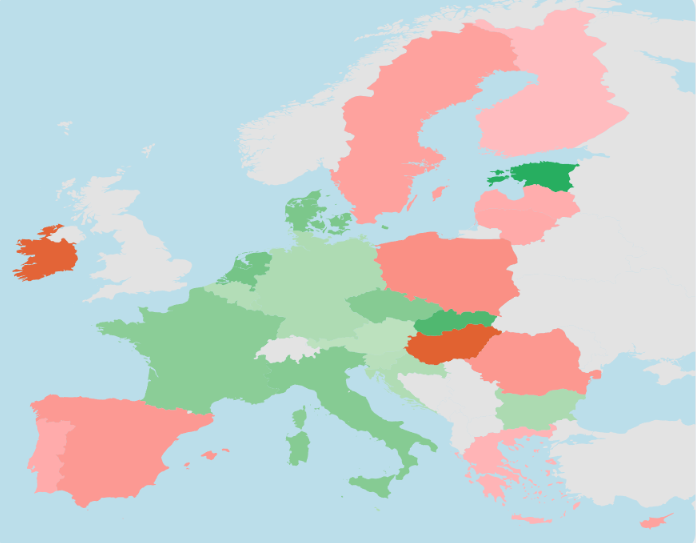
find the bar with your country’s code and click on the bar
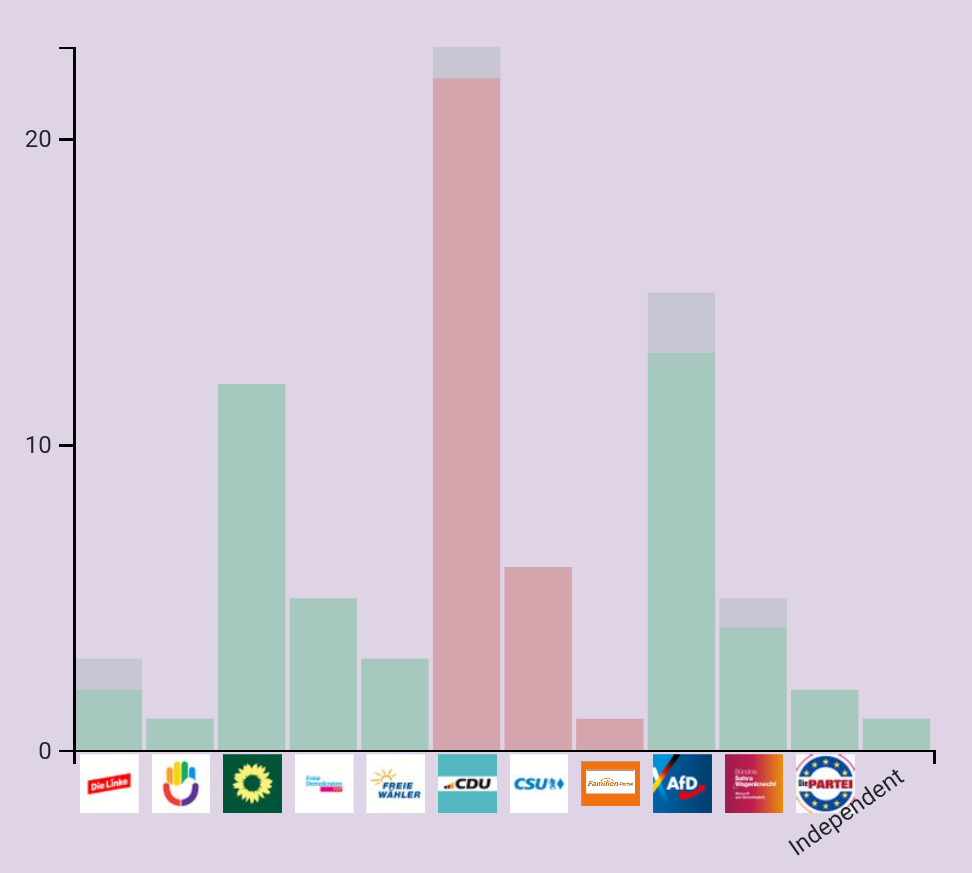
a bar chart above it now appears with the national parties
Example with Germany:
As you can see, all parties 100% opposed besides the conservative CDU/CSU and Family Party, who 100% supported Chat Control 1.0 (alongside almost 100% of their associated European People’s Party group relatives):
I have to say, I’m pretty happy about the German votes.
Of course the related CDU and CSU banded together to support it, with chancellor Merz of the CDU a vehement supporter, probably afraid to show weakness by infighting in current national politcal climate.
For anyone curious (and if I did not make a major mistake), some approximations:
Distributing every absentee according to their parties percentage on todays vote:
Against CC1.0: ~372 (58)
Favoring CC1.0: ~325 (51)
Abstaining: ~20 (3)
—
Anyway, apparently on average 11.8% of MEPs are absent on a roll-call vote (disregarding if one party has more absentees in general), which means for today’s numbers, if it wasn’t for summer recess:
Against: ~328
Favoring: ~287
Abstaining: ~18
—
This would not make the absolute majority needed, so the gambit with the “Proposal for rejection” paid off splendidly.
—
Also, like I indicated in a recent comment, positions changed noticeably since last direct vote on the matter, possibly because of you.
Lobbying is a normal activity conducted by every industry/interest group. Big Tech does a lot more lobbying in the U.S. and yet there is no Chat Control there.
Laws are passed by legislators. They are the ones responsible for bad laws.
Yes, lobbying is not bad per se, it is often used for good.
It becomes bad when a disproportionately large party like a multi-billion dollar company utilizes financial incentive or leverage against politicians official duty to establish a narrative or consensus they (i.e. the company) benefit from, oftentimes to the detriment of or against the intent of the citizens.
Well yes, but there also aren’t guardrails to prohibit them from doing exactly that.
If I understand correctly (IANAL):
Under 18 U.S.C. § 2258A US companies only have a duty to report material once they reach a knowledge threshold, but they are not prohibited from analyzing material to reach that threshold, e.g. Snap automatically analyzing pictures.
It is already allowed there, so no need for a CC1.0 equivalent.