The behavior of the company AdGuard

Greetings, community.

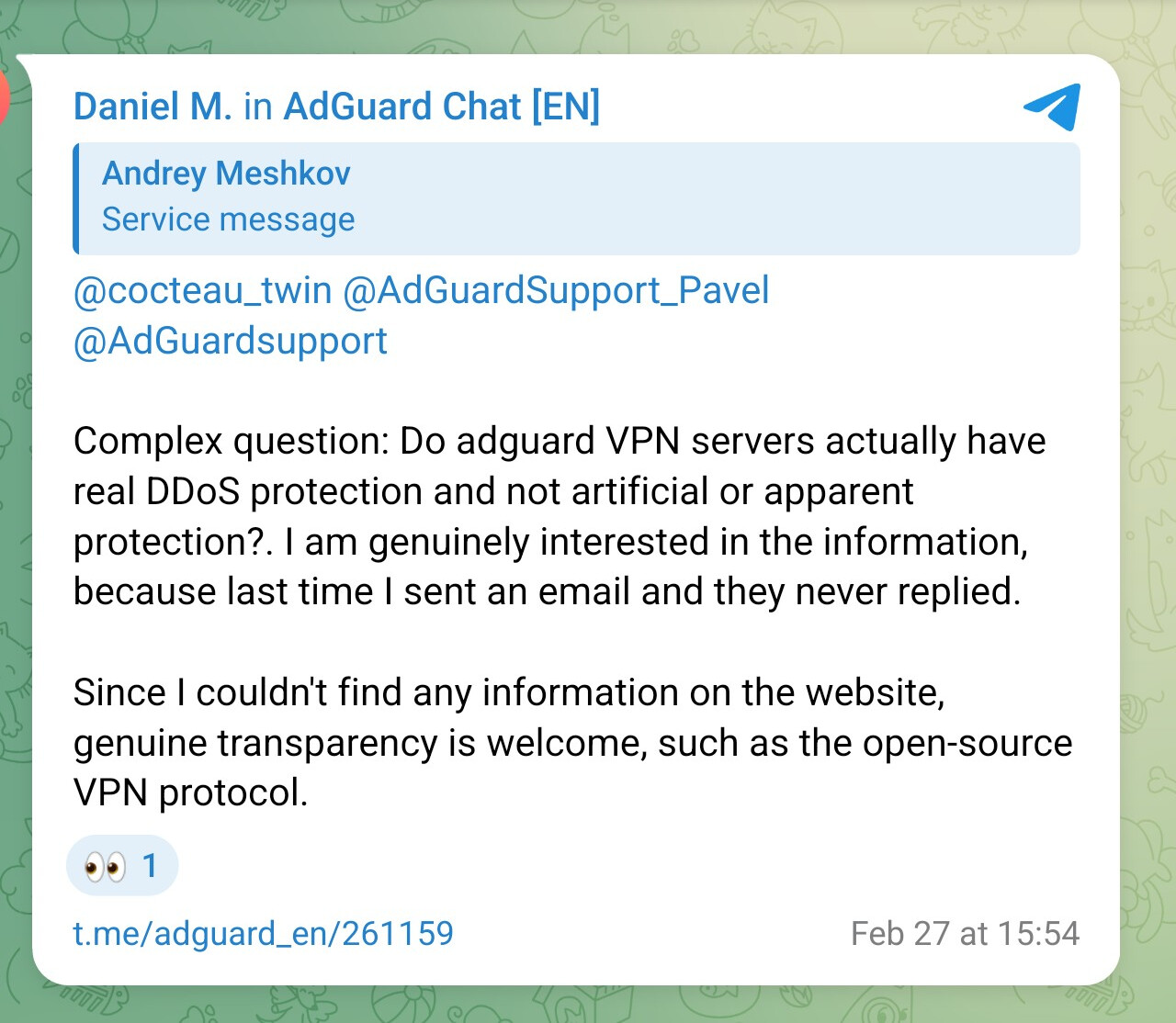
I’m Daniel, the author of the messages I’m about to share in this thread. It concerns a situation I had with AdGuard, which I discussed publicly in their Telegram group during a VPN session. What I’m going to show is simply what I’ve observed and verified myself, but it goes beyond the norm, since the company hasn’t responded to my email regarding DDoS protection for over a year. Is that surprising? No.

I had problems with the servers in Chile and Brazil. For example, when playing online multiplayer, the ping was unstable and forced me to disconnect the VPN. But that wasn’t all; even when not playing, there were reconnections. Although I reported this problem to support (long after my question about DDoS protection), they only responded generically in my language, Spanish.
The support was generic; they asked for the log files, but when I asked which level (since there are three), they didn’t respond. I gave another generic response, and while I replied that I hoped it would be resolved, I ended up abandoning the issue. I had already reported this in the Telegram group, stating that the support itself needs improvement, but I realized at that time that one of my messages had been deleted without any notification as to why.

So, I escalated the issue publicly and started pushing for improvements within their own group.

I have my evidence, such as the email. Lately, I haven’t thoroughly checked if they’ve improved the servers in Latin America.

Now, I’m presenting two types of evidence: a direct link to the text and a screenshot.

  1. Direct Link: SNBin
    Password: 94hm5#+65@33;(98:/ub5f_4j9

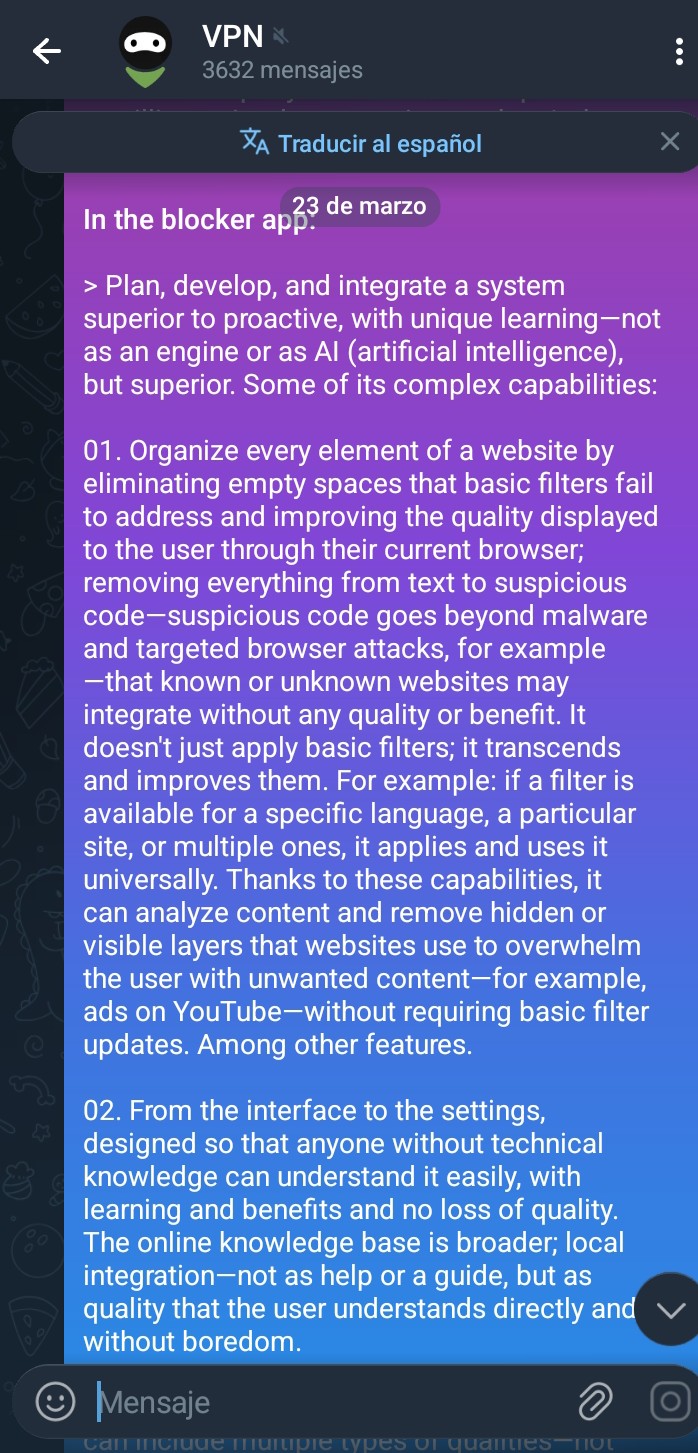
  2. Screenshot from beginning to end:

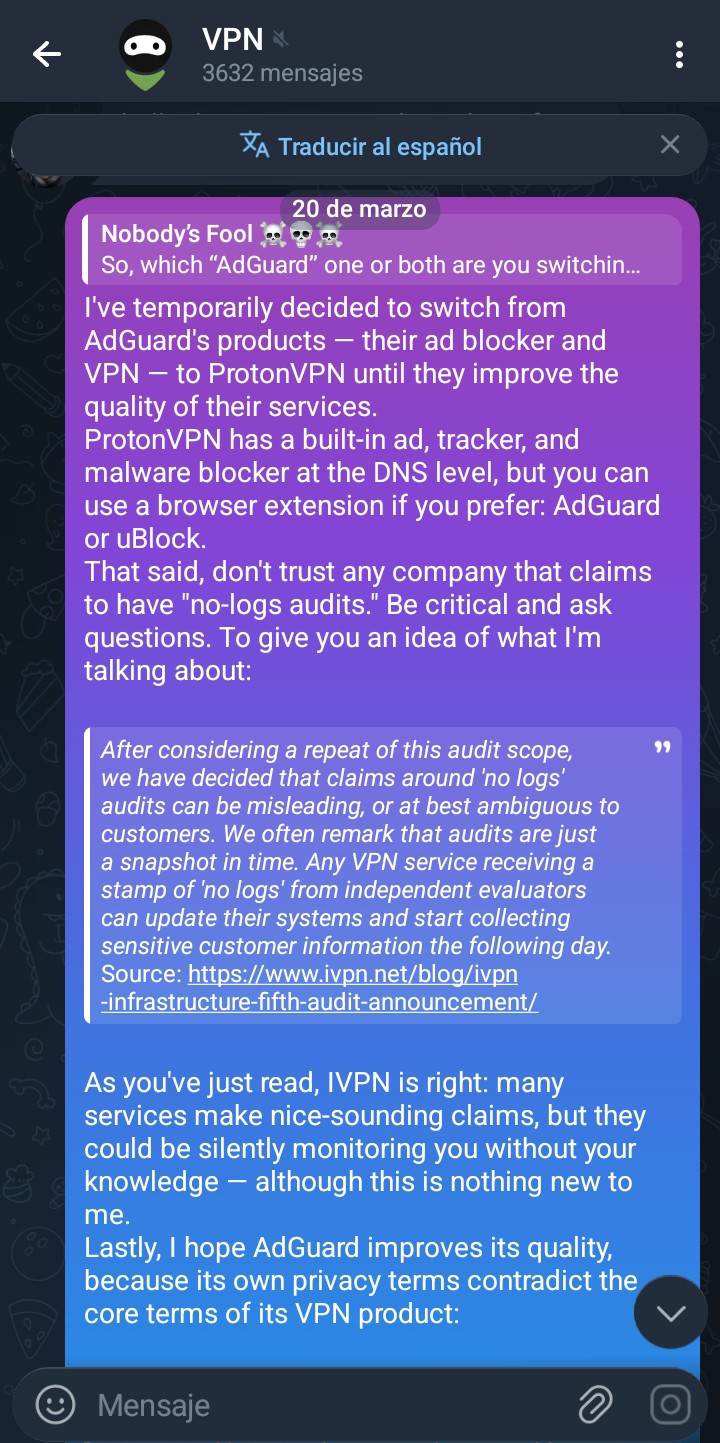
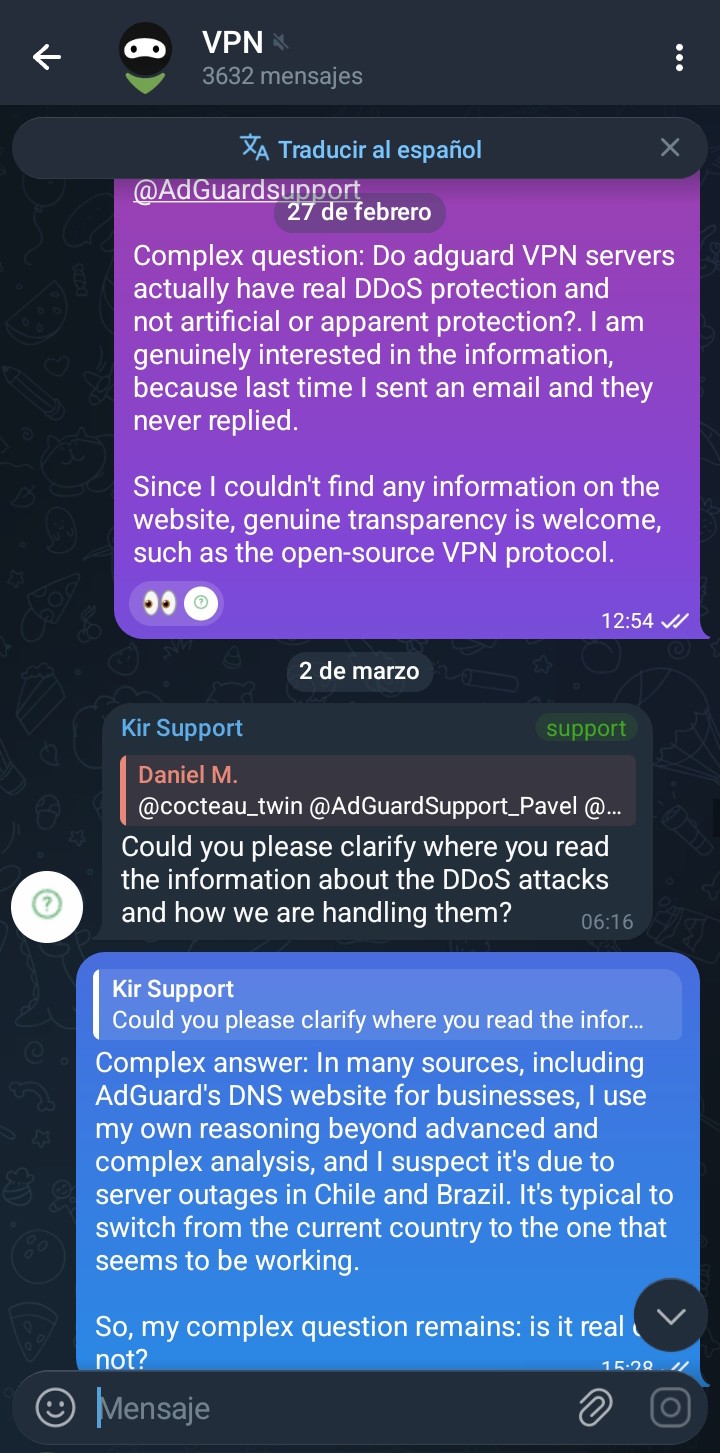
  • This is where I started with the question, adding context to strengthen my argument. Support responded generically, which is typical, so I responded strategically, citing the AdGuard Enterprise DNS source that mentions DDoS protection, explaining why it’s not on the VPN website, and connecting it to my fundamental question and its context.
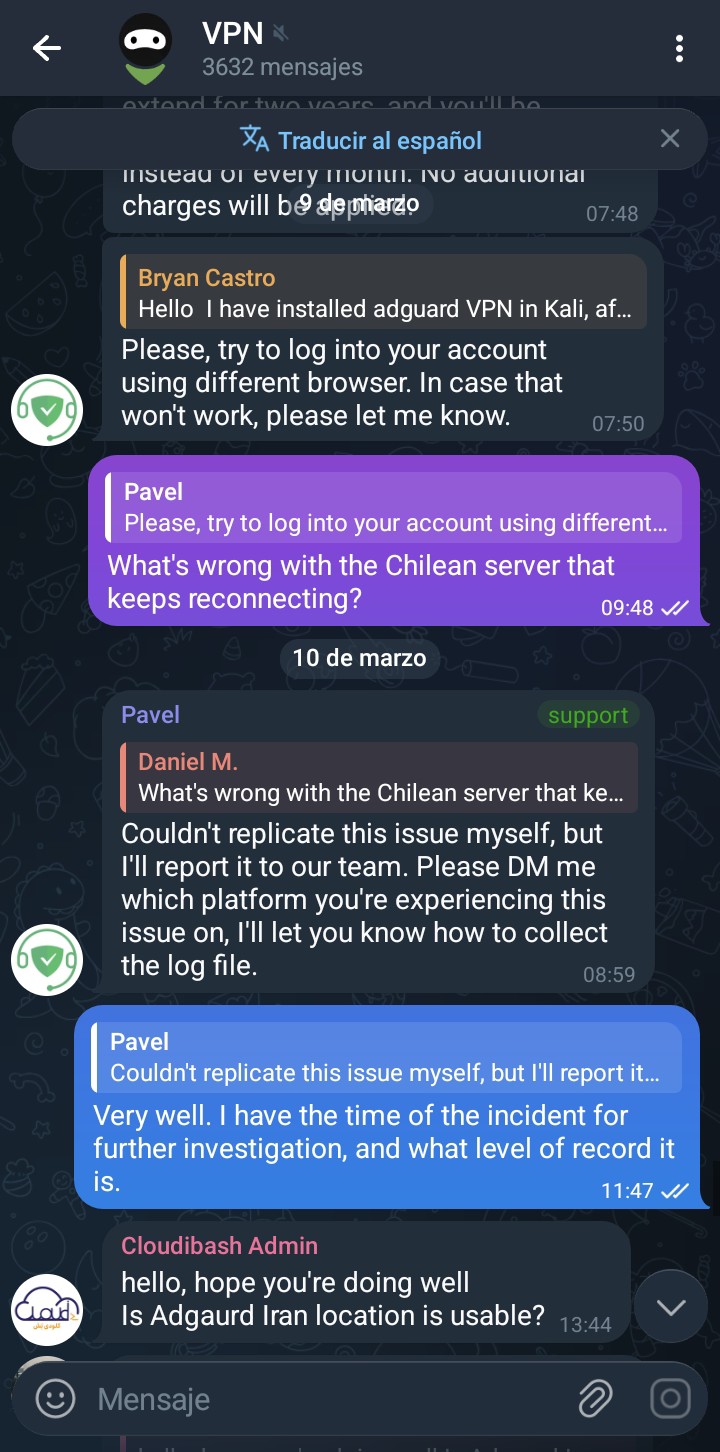
  • I reported the problem again in Chile, and received a generic response from support. I sent a private message (without log files) and received no response for a while, so I deleted the message. There are no excuses.
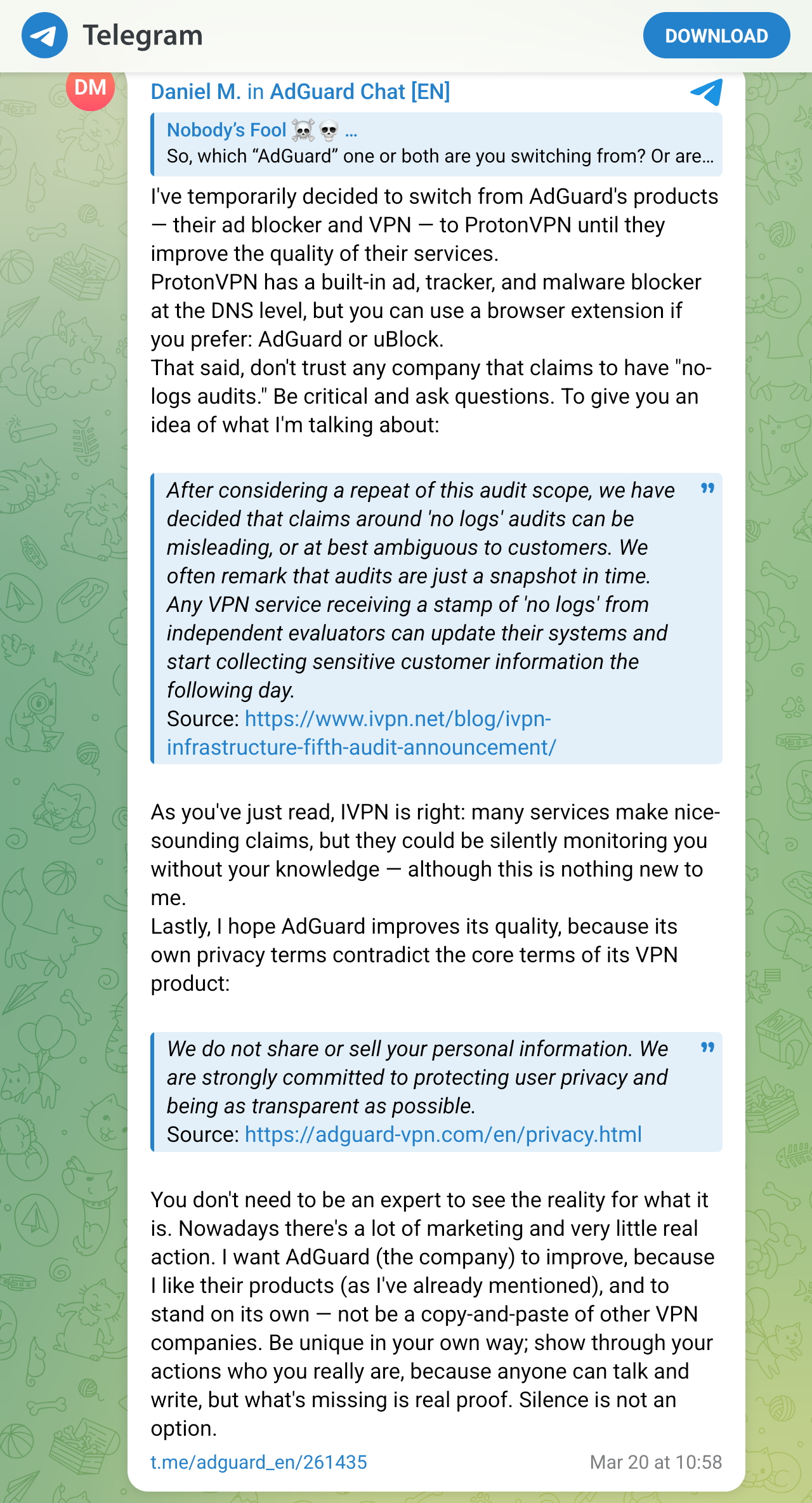
  • Someone reported a problem they were having. I had left my message after them, but it wasn’t directed at them; it was for AdGuard. I saw that the person replied, so I took the opportunity to clarify a bit and give my arguments to the person (even though it applies to the public). I cited the IVPN source, pointed out that the privacy of their document contradicts (not only transparency), and mentioned the other points that are written there.
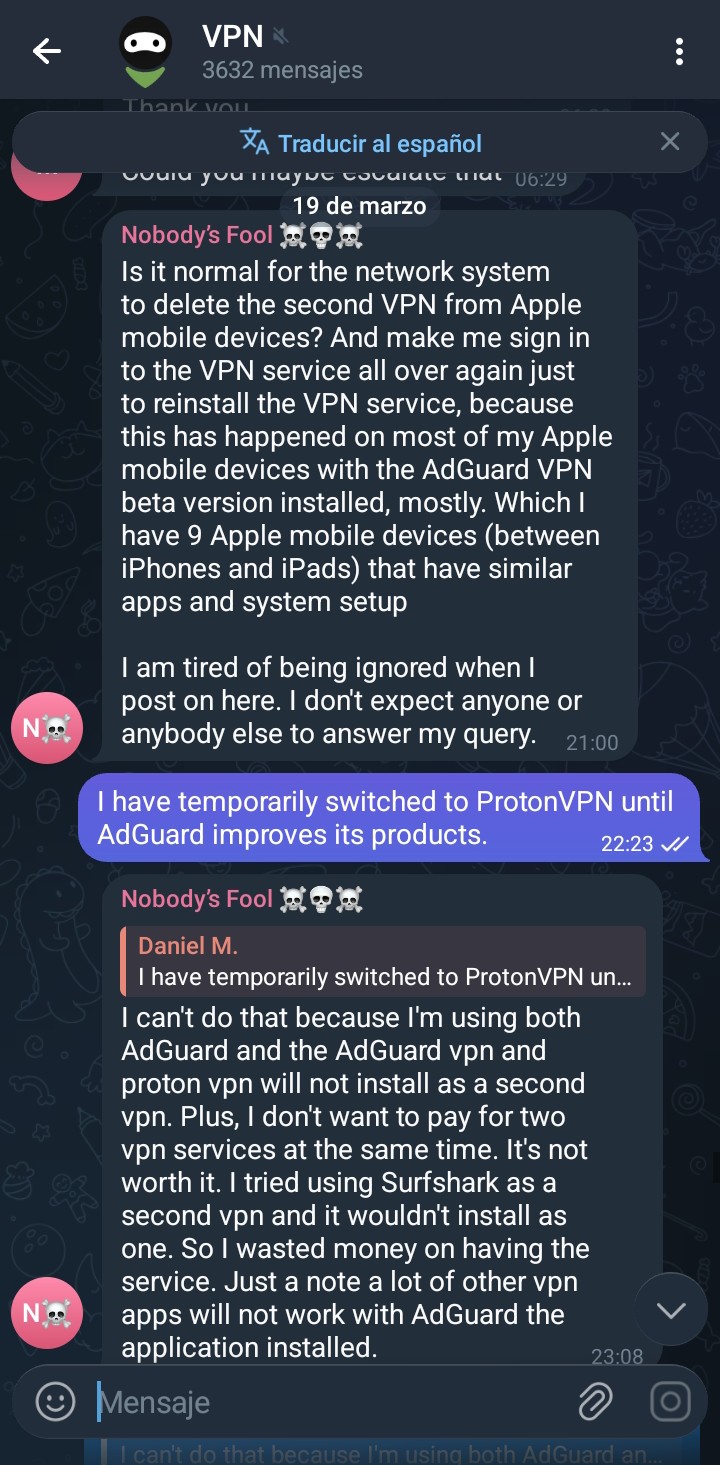
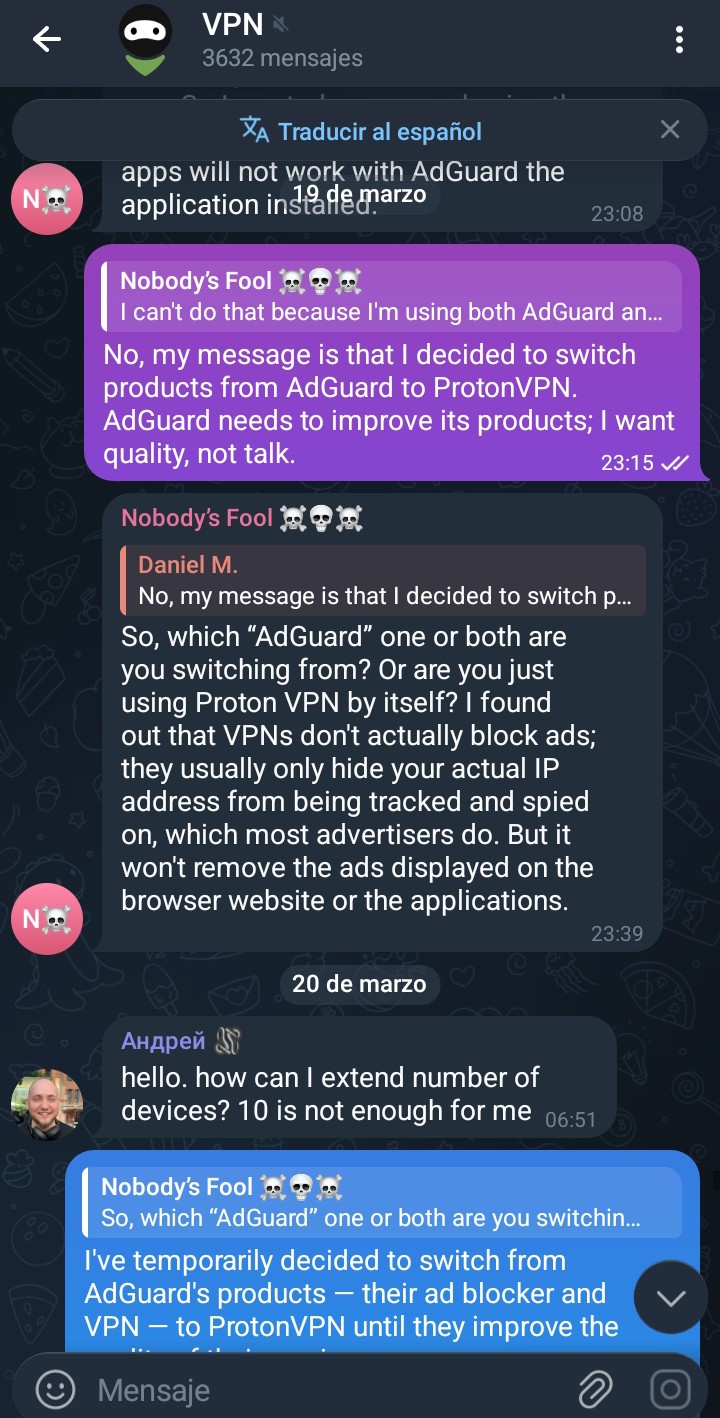
  • Another person (AM) mentioned the audits, and I replied that it wasn’t enough.
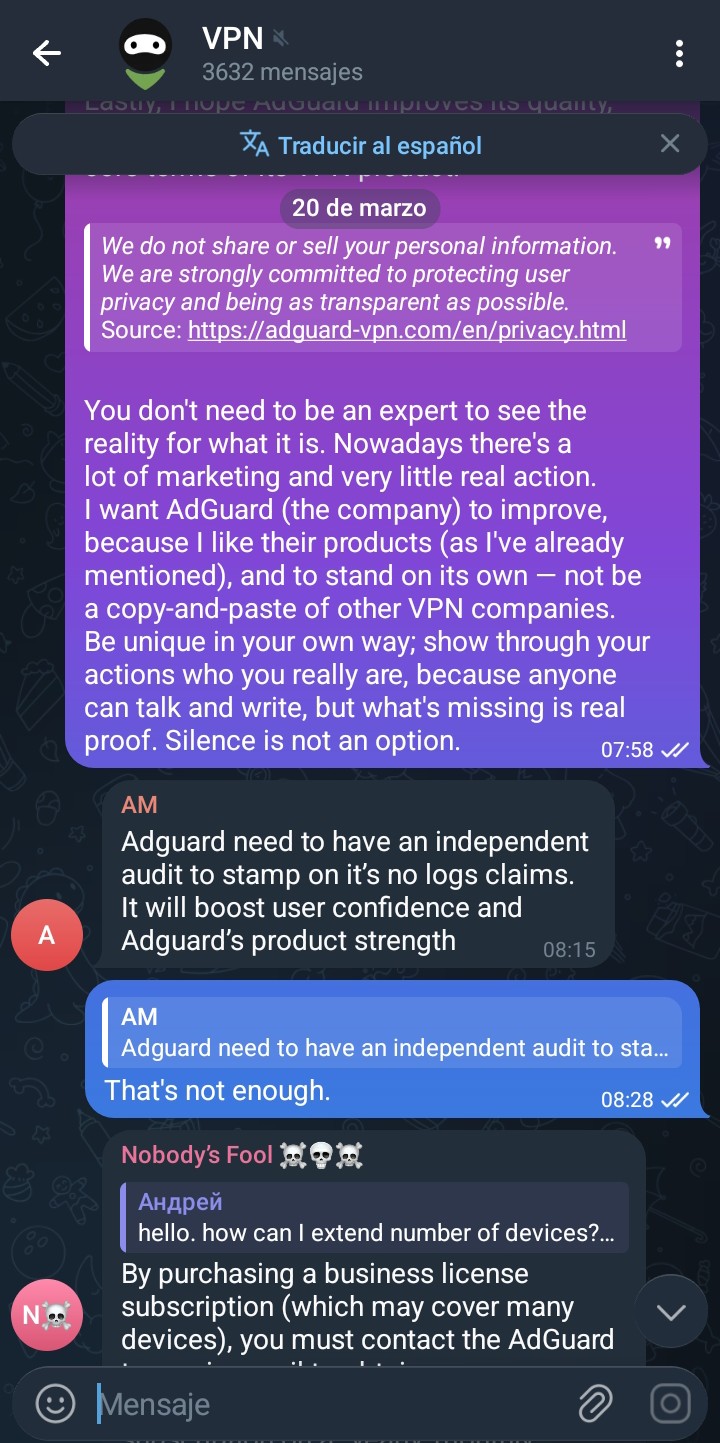
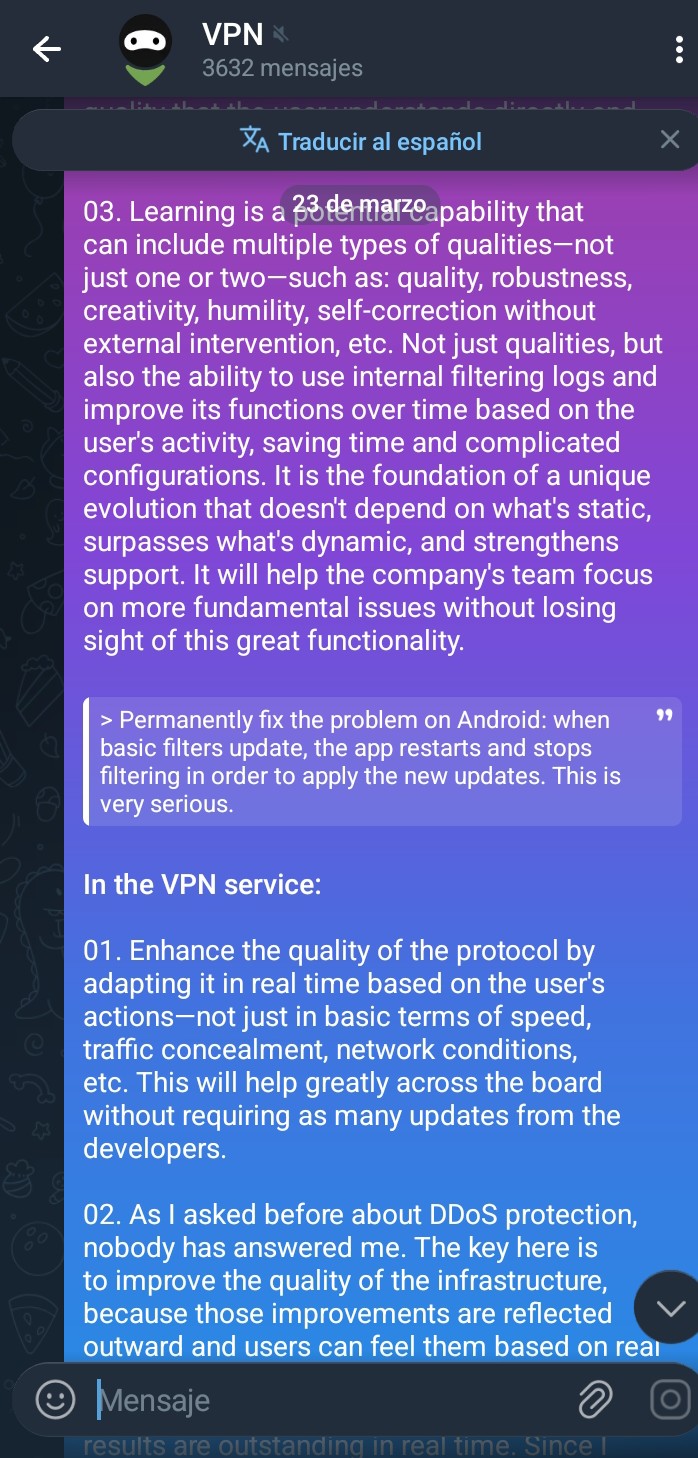
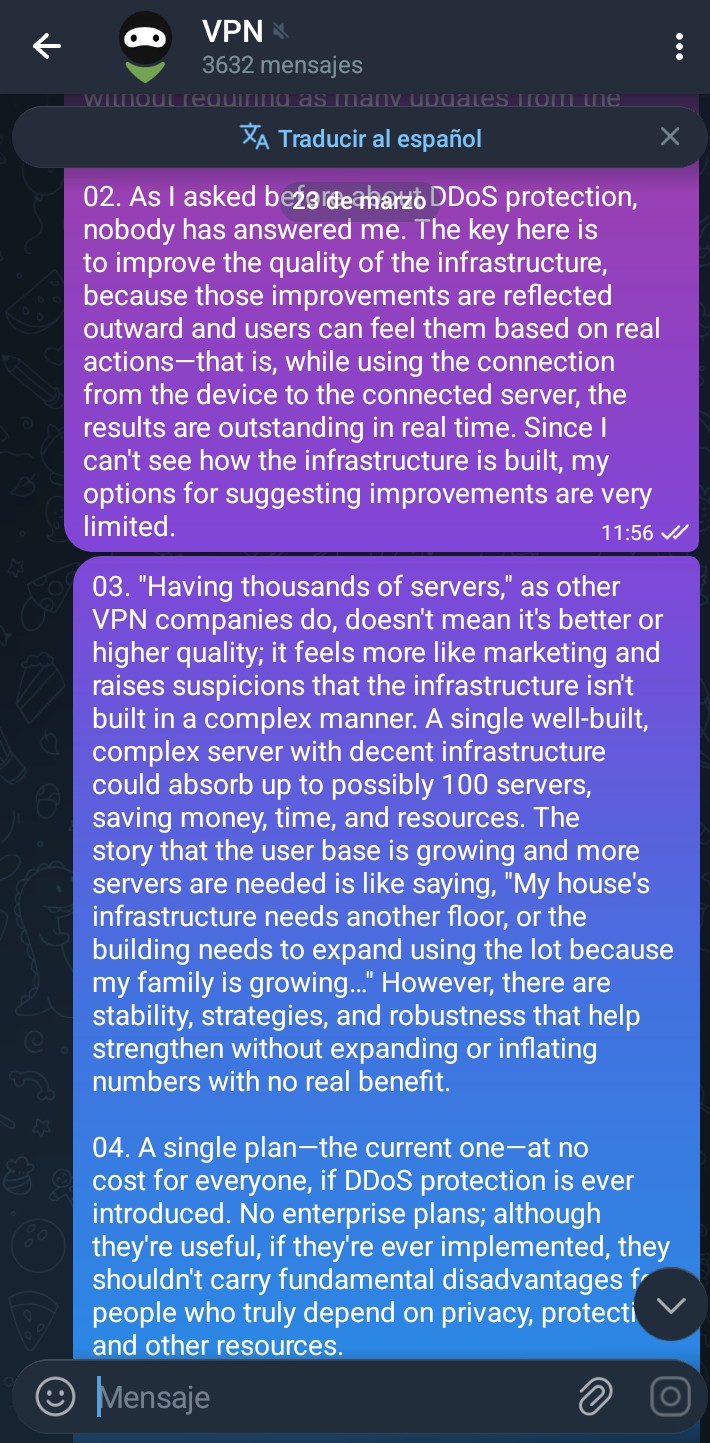
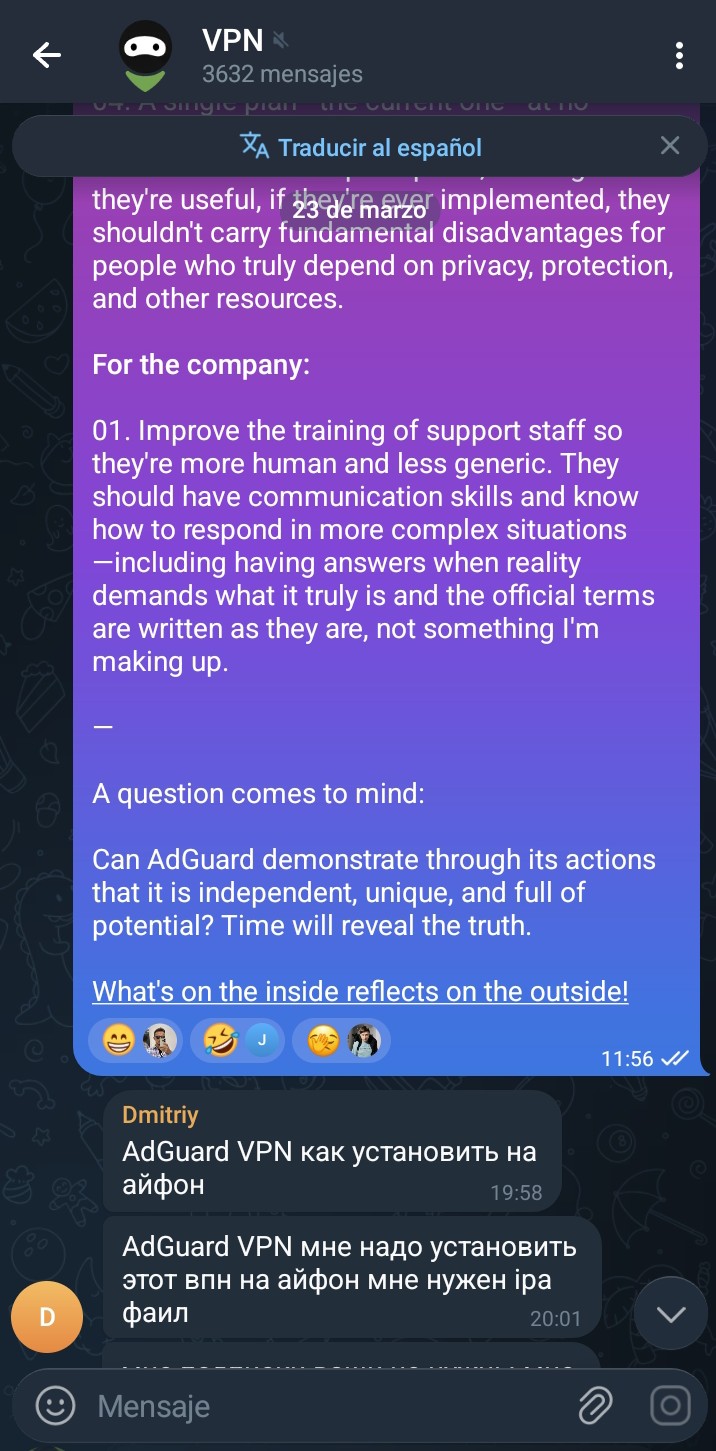
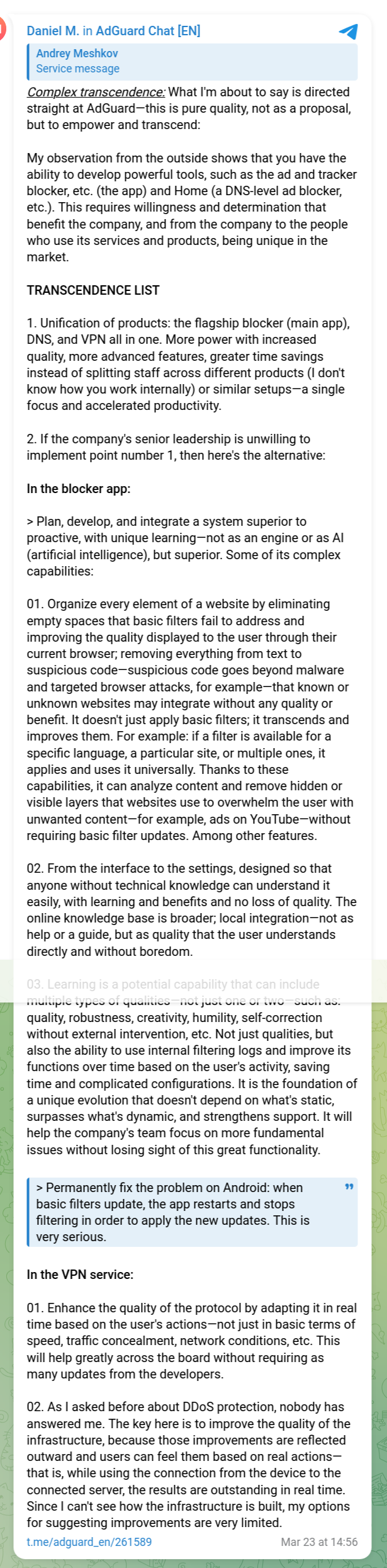
  • And here is my final message under my own decision (not reactive), quoting some members of the company in the group as can be seen in the first screenshot. As it reads, it is for the company and its products to improve.
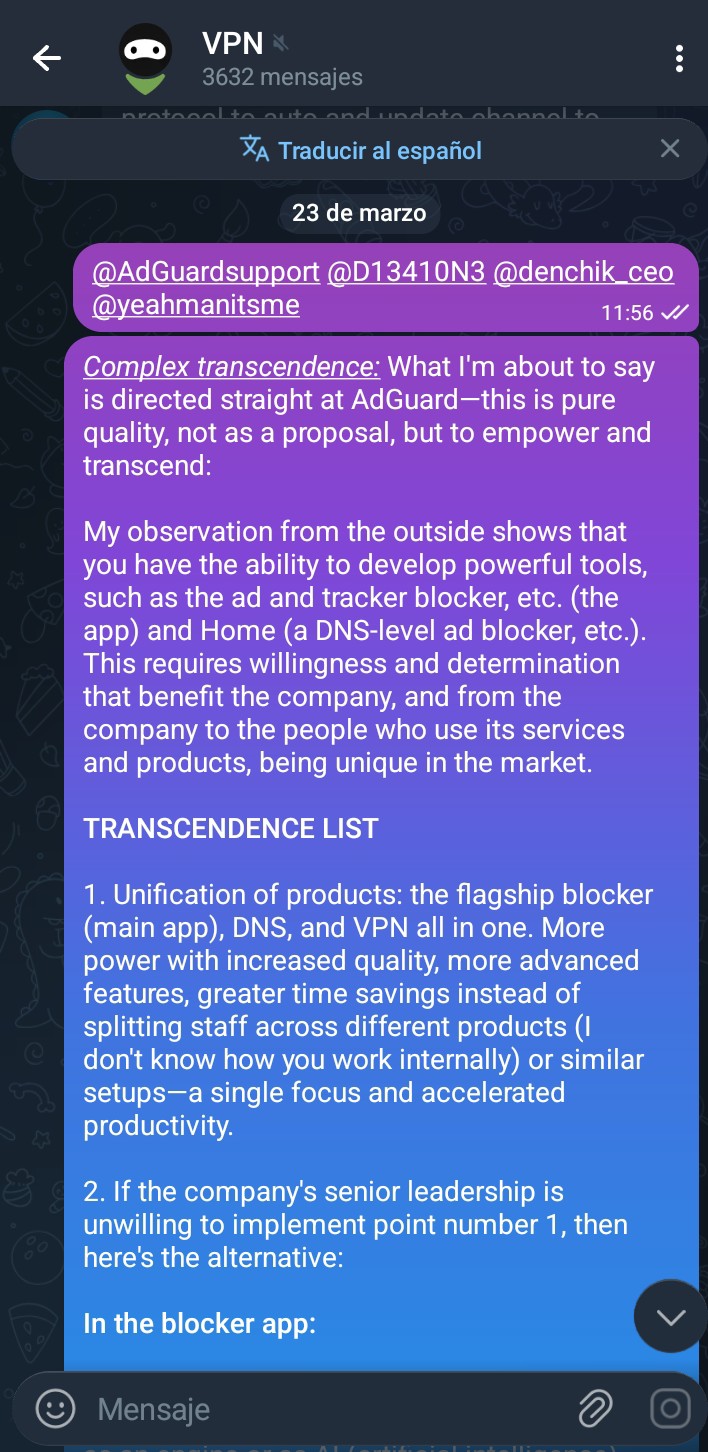
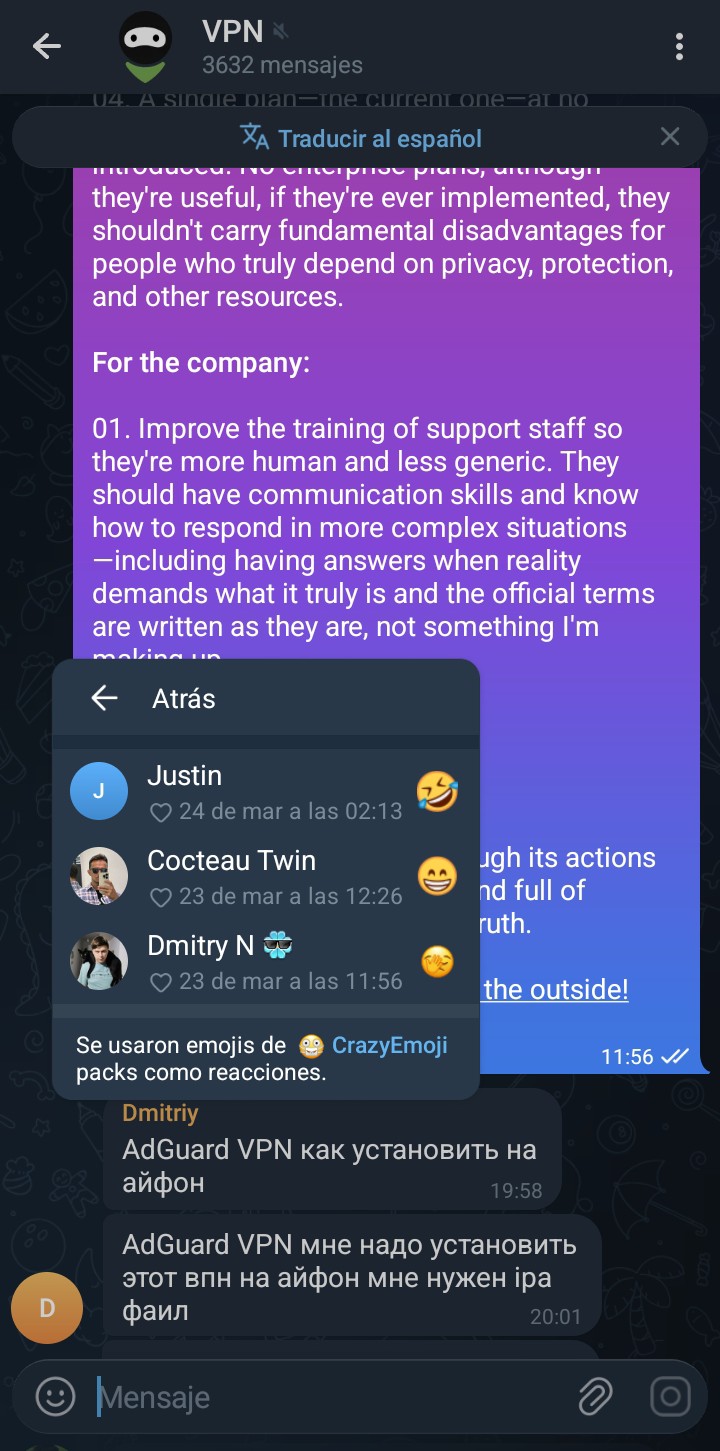
  • The reaction of two company members: the first is from support and the second (Dmitry N) is from DevOps. The third, named Justin, is not on the company’s membership list. This demonstrates that my messages confirm the reality of the company itself, beyond the question about DDoS protection.
I don’t know if they’re going to delete my AdGuard messages or what, but the important thing is, the actions are there.

Q&A session:

Someone might have a few questions, such as:

  1. What does this have to do with the context of AdGuard and the two members? Answer: It’s a recurring theme. Even though the message wasn’t intended for Nobody’s, I had to reply, and so I took the opportunity to expand on the context of my initial, complex question. Everything is interconnected.

  2. Why did I mention virtues like humility, etc., in my last message? Answer: It’s coded and directed at AdGuard. You should never trust software, regardless of its origin, whether it claims to possess virtues or not. I acknowledge that bots exist today; they can be useful for some people, but not for me.

  3. Did I mention a free plan in my last message? Answer: No. If AdGuard ever decides to implement real DDoS protection on its website, the protection should be free for the current, universal plan, not something separate, so everyone can benefit.

  4. Am I trying to destroy AdGuard? Answer: No. My messages speak for themselves.

  5. Can my messages be misinterpreted? Answer: Yes. I encourage those who only skim my messages to use reasoning and take the time to understand them, including those without the “complex” tags. I repeat: Everything is coherently interconnected from beginning to end.

  6. Why didn’t I respond to the emojis in the last message? Answer: It’s not worth it, because my messages already provide the answer. Responding to them would be pointless.

  7. Why the tags “complex” - question, answer, and “transcendence”? Answer: As I said in point number 5, I’m serious, and it’s about forcing a deeper understanding of a company, not for malicious purposes. It’s not limited to the above.

  8. So, am I trying to please, make a good impression, and socialize with the company? Answer: No. Their actions will demonstrate whether they’ve truly improved over time. I want them to improve and understand that we live in a reality where lies, manipulation, etc., exist.

  9. Why did I mention quality and actions? Answer: It means what matters to me; it’s what the person is. Their actions will demonstrate their quality. In a company, there are several people, and that’s what I observe, analyze, and question, because words are one thing, actions are another. The result will determine who they are, even if access is sometimes limited.

The end. Time will reveal their true actions, distinguishing between words.
Can’t see the pics. Poor baby

You should not post suspicious links. If you have something to share, just share the screenshot. I don’t know why you don’t do that.

I don’t think anyone should be clicking on your links.

“t . me” is a domain owned by telegram.
How about you share it with screenshots uploaded to PG or a privacy respecting Third Party like PrivateBin?

1 Like

I would appreciate more context and your intention of making this post.

1 Like

Exactly. A bunch of random links from a 3 day old account is not what I am looking to click on right now.

Very sus. This post/thread should not exist here, as it stands.

Sceenshots just to keep it on track if @DanielM get unflagged.

First link

Second link

Third link

3 Likes

You can post links to archive / mirrors. Here’s those 3 links you meant to post (in order):

Not from AdGuard, but such overtly long feedback messages will seldom register, especially if they read like they’ve been generated by some LLM.

That said, may be you have valid complaints about the “quality” of AdGuard’s public VPN service (which isn’t among the 3 PrivacyGuides-recommended public VPN providers), and if they aren’t addressing those despite you taking time to give them the feedback, you’re better off using another provider. Or, not using any public VPN at all.

1 Like

Thanks for sharing. I’ve already provided the context.

I use a translator for other languages. If you don’t understand the message, let me know and I’ll use Spanish.

I already provided the context for what you said next. Thanks for sharing the links; it would be great if people joined the group and saw the messages.

Best regards.

THE CONTRADICTION BETWEEN PRIVACY AND ADGUARD VPN TERMS

As I mentioned before on Telegram, it’s necessary to bring to light an uncomfortable but fundamental truth. I said it wasn’t necessary to be an expert, and that’s true, but I want to make it clear that I will use basic terminology so that people who are genuinely interested in the truth and struggle to understand the complexities, despite using reasoning (it depends on many factors, such as health, for example), can benefit. This is crucial help in this day and age, and I will help them directly and without beating around the bush.

Terms “EULA” - source: AdGuard VPN for your privacy and security
Privacy “Privacy Policy” - source: AdGuard VPN for your privacy and security

I’m going to work only with the most important parts of these two “documents”.

In the privacy section, mainly below the date, there’s a summary that states the following:

Summary

We do not share or sell your personal information. We are strongly committed to protecting user privacy and being as transparent as possible.

  1. We don’t collect logs on VPN servers and don’t know what websites you visit.

  2. We collect only the information necessary for our products and services to function properly.

  3. You are not required to share your personal data with us. You can delete your information by deleting your AdGuard account at my.adguard-vpn.com or by sending us a request at privacy@adguard-vpn.com.

→ In this small section, two of the most important words appear: firmly → committed. Is it visually appealing? No. They’re just words. To verify that this is being followed in real time, AdGuard itself will have to be put to the test. Is this the most important and risky point for the company? Yes; they are obligated to comply permanently with all users of their VPN, regardless of the terrible consequences, considering the entire context, unless they decide to change those two words to something temporary or meaningless, or simply keep them but correct the other areas.

However, the terms of the EULA present two major points of criticism that the two previously mentioned clauses directly contradict:

First:

IMPORTANT: THESE TERMS OF SERVICE (“TERMS”, “EULA”) ARE A LEGAL AGREEMENT BETWEEN YOU (AN INDIVIDUAL) AND ADGUARD SOFTWARE LIMITED (OWNER OF ALL RIGHTS, WHETHER EXCLUSIVE OR OTHERWISE, TO THE SOFTWARE). READ IT CAREFULLY BEFORE COMPLETING THE INSTALLATION PROCESS AND USING THE SOFTWARE. BY USING THE SOFTWARE, OR BY PRESSING A BUTTON INDICATING YOUR ACCEPTANCE IN THE WINDOW CONTAINING THESE TERMS, OR BY TYPING THE APPROPRIATE SYMBOL(S), YOU CONFIRM YOUR ACCEPTANCE OF THE SOFTWARE AND AGREE TO BECOME BOUND BY THESE TERMS.

IF YOU DO NOT AGREE TO BE BOUND BY THESE TERMS, DO NOT DOWNLOAD, INSTALL OR USE THE SOFTWARE, AND/OR YOU MUST DELETE THE INSTALLED SOFTWARE.

NOTE THAT THESE TERMS REQUIRE THAT YOU AND ADGUARD SOFTWARE LIMITED SUBMIT ANY DISPUTE ARISING OUT OF THE INTERPRETATION OR APPLICATION OF THESE TERMS OR ANY BREACH THEREOF TO ARBITRATION.

Direct refutation: The argument states that upon accepting the terms (EULA), the individual is not bound by them, whether fully, partially, or minimally. The company cannot subject a person to its terms, especially when they contain contradictions and are of little value.

Second:

6. Warranty disclaimer

6.1 YOU EXPRESSLY AGREE THAT YOUR USE OF THE SOFTWARE IS AT YOUR SOLE RISK. THE SOFTWARE IS PROVIDED ON AN “AS IS” AND AN “AS AVAILABLE” BASIS. RIGHTHOLDER AND ITS SUPPLIERS AND PARTNERS DISCLAIM ALL WARRANTIES AND REPRESENTATIONS WITH REGARD TO THE SOFTWARE OR ANY PRODUCTS OR SERVICES PROVIDED UNDER THIS EULA, WHETHER EXPRESS, IMPLIED, OR OTHERWISE, INCLUDING THE WARRANTIES OF MERCHANTABILITY, FITNESS FOR A PARTICULAR PURPOSE, NON-INFRINGEMENT, TITLE, AND QUIET ENJOYMENT. RIGHTHOLDER DOES NOT WARRANT THAT THE SOFTWARE IS ERROR-FREE OR WILL OPERATE WITHOUT INTERRUPTION. NO RIGHTS OR REMEDIES REFERRED TO IN ARTICLE 2 or ARTICLE 2A OF THE UNIFORM COMMERCIAL CODE (UCC), AS IMPLEMENTED IN ANY JURISDICTION, WILL BE CONFERRED ON YOU UNLESS EXPRESSLY GRANTED HEREIN. THE SOFTWARE IS NOT DESIGNED, INTENDED, OR LICENSED FOR USE IN HAZARDOUS OR HIGH-RISK ENVIRONMENTS OR USE CASES REQUIRING FAIL-SAFE CONTROLS, INCLUDING WITHOUT LIMITATION, THE DESIGN, CONSTRUCTION, MAINTENANCE, OR OPERATION OF NUCLEAR FACILITIES, AIRCRAFT NAVIGATION OR COMMUNICATION SYSTEMS, AIR TRAFFIC CONTROL, AND LIFE SUPPORT OR WEAPONS SYSTEMS. RIGHTHOLDER SPECIFICALLY DISCLAIMS ANY EXPRESS OR IMPLIED WARRANTY OF FITNESS FOR SUCH PURPOSES.

6.2. IF APPLICABLE LAW REQUIRES ANY WARRANTIES WITH RESPECT TO THE SOFTWARE OR ANY PRODUCTS OR SERVICES PROVIDED UNDER THIS EULA, ALL SUCH WARRANTIES ARE LIMITED IN DURATION TO SIXTY (60) DAYS FROM THE DATE OF DELIVERY OF SUCH SOFTWARE, PRODUCTS, OR SERVICES.

6.3. NO ORAL OR WRITTEN INFORMATION OR ADVICE GIVEN BY RIGHTHOLDER OR ITS PARTNERS, OR ITS OR THEIR AGENTS OR EMPLOYEES, SHALL CREATE A REPRESENTATION OR WARRANTY, NOR IN ANY WAY INCREASE THE SCOPE OF ANY EXPRESS REPRESENTATION OR WARRANTY PROVIDED HEREIN.

6.4. RIGHTHOLDER SHALL HAVE NO LIABILITY, AND YOU RELEASE RIGHTHOLDER OF ANY AND ALL LIABILITY IF THE SOFTWARE HAS BEEN ALTERED IN ANY WAY, OR FOR ANY FAILURE THAT ARISES OUT OF USE OF THE SOFTWARE WITH OTHER THAN A RECOMMENDED HARDWARE CONFIGURATION, PLATFORM, OR OPERATING SYSTEM.

6.5. RIGHTHOLDER IS NOT RESPONSIBLE FOR ANY THIRD-PARTY SOFTWARE INSTALLED BY YOU, INTENTIONALLY OR INADVERTENTLY, BY PURCHASING LICENSES OR DOWNLOADING THE SOFTWARE FROM AN UNAUTHORIZED PARTY THAT IS NOT A RIGHTHOLDER PARTNER.

6.6. YOU ARE RESPONSIBLE FOR ENSURING THAT YOUR PARTICULAR USE OF THE SOFTWARE DOES NOT VIOLATE APPLICABLE LAW, THIRD-PARTY RIGHTS, OR YOUR CONTRACTUAL OBLIGATIONS TO THIRD PARTIES.

7. Limitation of liability

7.1. TO THE MAXIMUM EXTENT PERMITTED BY LAW, NEITHER RIGHTHOLDER NOR ITS SUPPLIERS OR PARTNERS SHALL BE LIABLE TO YOU OR ANY THIRD PARTY FOR ANY INDIRECT, SPECIAL, INCIDENTAL, PUNITIVE, COVER, OR CONSEQUENTIAL DAMAGES (INCLUDING, BUT NOT LIMITED TO, DAMAGES FOR THE INABILITY TO USE EQUIPMENT OR ACCESS DATA, LOSS OF DATA, LOSS OF BUSINESS, LOSS OF PROFITS, BUSINESS INTERRUPTION OR THE LIKE), ARISING OUT OF THE USE OF, OR INABILITY TO USE, THE SOFTWARE OR ANY PRODUCTS OR SERVICES PROVIDED UNDER THIS EULA WHETHER BASED ON ANY THEORY OF LIABILITY, INCLUDING BREACH OF CONTRACT, BREACH OF WARRANTY, TORT (INCLUDING NEGLIGENCE), PRODUCT LIABILITY OR OTHERWISE, EVEN IF RIGHTHOLDER OR ITS SUPPLIERS OR PARTNERS HAVE BEEN ADVISED OF THE POSSIBILITY OF SUCH DAMAGES AND EVEN IF A REMEDY SET FORTH HEREIN IS FOUND TO HAVE FAILED OF ITS ESSENTIAL PURPOSE.

7.2. TO THE MAXIMUM EXTENT PERMITTED BY LAW, RIGHTHOLDER’S TOTAL LIABILITY TO YOU FOR ACTUAL DAMAGES FOR ANY CAUSE WHATSOEVER WILL BE LIMITED TO THE AMOUNT YOU ACTUALLY PAID TO RIGHTHOLDER FOR ANY SOFTWARE OR OTHER PRODUCTS OR SERVICES PROVIDED UNDER THIS EULA.

7.3. THE FOREGOING LIMITATIONS ON LIABILITY ARE INTENDED TO APPLY TO ALL ASPECTS OF THIS EULA.

Direct refutation: The EULA states “no guarantees with a time limit” (point 6) and “liability” (point 7), but simultaneously claims to be subject to the law without specifying which law, how, or to what extent. A company is obligated to incorporate the relevant laws based on its arguments; this is a major weakness. The company points to the user of its VPN as responsible for its use, while simultaneously disclaiming liability (limited). This includes: no matter what we say or do, whether it has real DDoS protection or not, remaining silent if applicable (as the evidence presented earlier indicates), etc.

The fundamental question that arises here is: Are these responsibilities correct and natural? Answer: No. If they firmly claim to be committed to privacy, they are obligated to completely disregard these terms to protect the people who use their VPN, regardless of what happens in real time, not every second, minute, etc.

Overall rebuttal: AdGuard’s argument with the two “documents” is as follows: > We are firmly committed to protecting your privacy, but it is not guaranteed, and if it isn’t, we are not responsible for what happens.

That argument falls apart under scrutiny; that is the reality itself.

The result of the rebuttal: AdGuard not only demonstrates deceptive advertising, but also contradictions in its own arguments, a lack of coherence, and blatant manipulation (whether conscious or not). Whoever wrote those “documents” has made a colossal mistake.

Direct solution: Resolve the problem definitively as soon as possible, by genuinely applying virtues such as humility, sincerity, etc.

List of questions and answers that come to mind:

  • Can I trust AdGuard? No. Not until their true actions are proven, because genuine (not just apparent) regret exists, but it could be ignorance or not, and opportunity is limited.
  • Can I trust the enterprise DNS because it mentions DDoS protection on its website? No. Not until its actual functionality is demonstrated. The documents presented above already raise suspicions about its legitimacy.
  • Can I entrust all my traffic, including my personal data, to AdGuard? No. I don’t know if they are logging anything in real time from one person or several, or from everyone, whether it’s some of their logs or all of them. This isn’t an absolute statement, but if you are truly concerned about your privacy, you should take action: don’t buy (if you haven’t already), temporarily abandon AdGuard, or abandon it completely. The choice is yours.
  • Can I give AdGuard another chance if they genuinely do everything correctly? It depends. Sometimes appearances are deceiving, and it’s crucial to refute this to avoid future deception. This isn’t paranoia; it’s simply a fact of life. Therefore, we must re-examine, analyze, and question whether they truly did the right thing. This requires time, depending on the circumstances, willpower, and the ability to act with self-control.

End.

2 Likes