I’ve chatted with Session team members on many occasions. In my experience, Session has always been a bit stubborn. As an example, see the chat excerpts in my thread on deterministic file encryption.
Defending their positions and steering their ship behind closed doors. The odd survey or user testing (whose results I’ve never seen) seemed haphazard at best. It’s not a good look; but as a user, the lack of influence on this “open source, closed doors” project is something you got used to.
That said, I should at least praise some of the newer recruits, as they certainly did try to work with me. I can’t imagine what the workplace culture is like.
Mishaps that should’ve been caught earlier, persistent bugs, and attention being paid to external partners as opposed to home-grown contributors — it was okay as long as the service was free.
It’s true; a lot of node operator trust was lost in the SESH pivot, and even before that, in the times when the network was choked out there indeed was an exodus of users (whether it was a particular spammer or a client bug triggering the bad server code, I guess we’ll never know). Still, a lot of users stuck around. For the most part, Session did what it needed to do. Even if we had our complaints.
But Session bit off more than it could chew. Technical debt was accumulating and they weren’t meeting their goals. Even monetization has been on the roadmap for a long time. Of course, the paid tier is set to be largely cosmetic; just like you would expect from a tech startup in the 2010’s. (c.f. SimpleX, whose monetization hinges on providing a tangible service to their customers.)
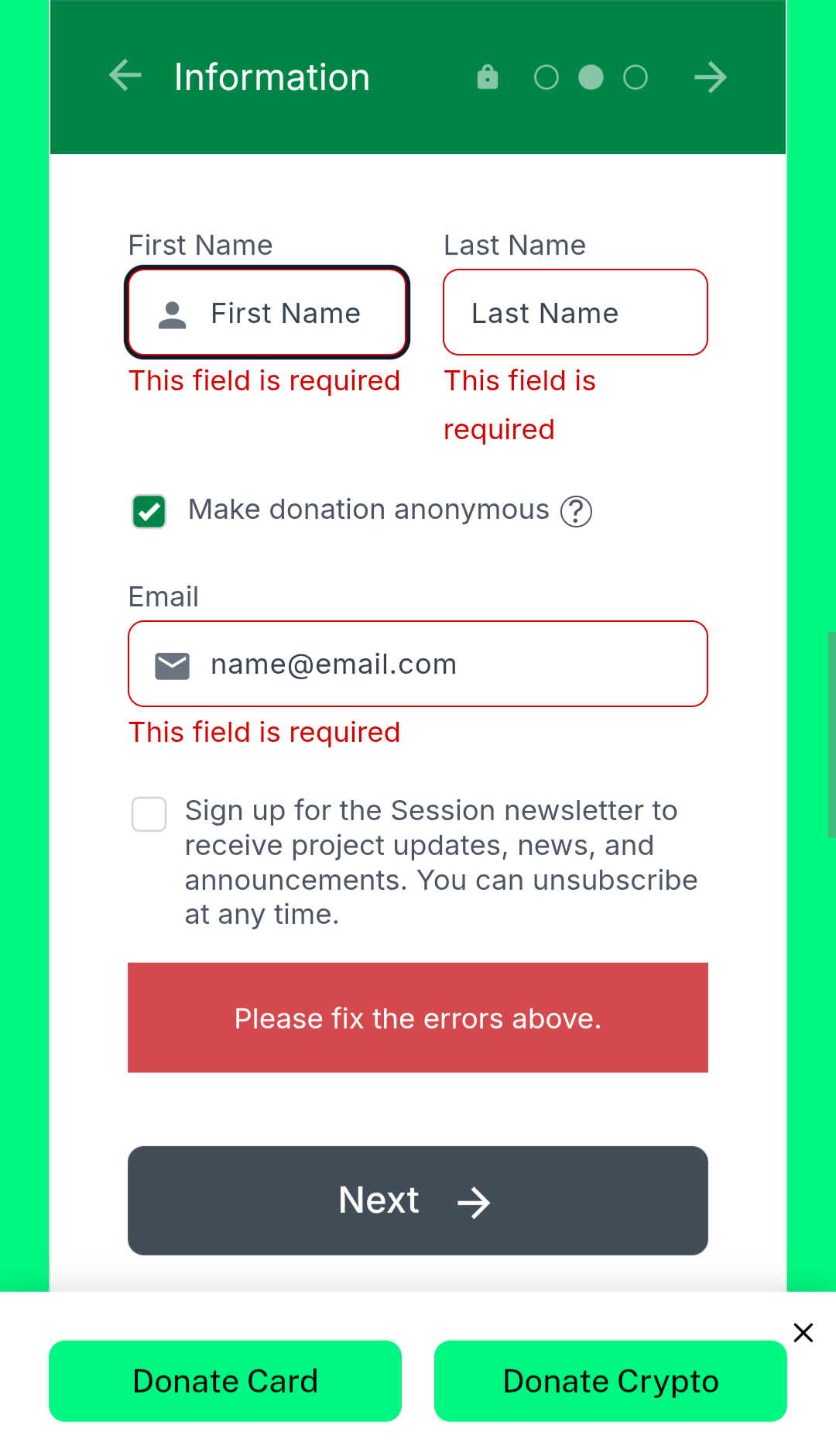
Even now, the donation page is talking to us like we’re investors. The humility to lay out the issues that have led them here hasn’t arrived yet, and I suspect it won’t ever; not under the current leadership.
They’ve spent all this time projecting an image of confidence. I can’t blame them for being afraid of the consequences of a move like that. We’ll see whether it comes to that.
Session’s audience is now bigger than ever. But even if they acknowledged their stubbornness, restructured their development and commited to doing better — I wonder who, after all this time, would actually listen with an open heart?
And — not that it has any particular impact on the PFS argument — but despite having strayed quite far from Signal, Session did indeed start as a Signal fork. It’s easy to forget that fact.
But that’s just my two cents.