Chutes.ai security/privacy questions

Hey, never heard of that one but it’s definitely a cool initiative! :heart:
I’m not against secure and private tools, quite the opposite, the more control/transparency the better. :+1:t2:


I never said that the age was the only aspect, meanwhile if we take some examples of companies that are young-ish like:

  • Ente, been interviewed and has some public visibility while being very clear about their product and communication
  • Immich, same: they do have quite a few videos on Futo and are active + transparent with their community accross mainstream channels
  • Servury, literally joined the server and asked how to improve his website/app
  • plenty of other product founders are here[1], transparent, take feedback + criticism, iterate and improve on community’s input

So it’s not specifically about how long you’ve been alive but it’s also about what you did in that timeframe.
It’s one thing to ship claims, another to be transparent.

Meanwhile, when I do visit chutes.ai, I am greeted with this amazing stack of tracking in every direction.
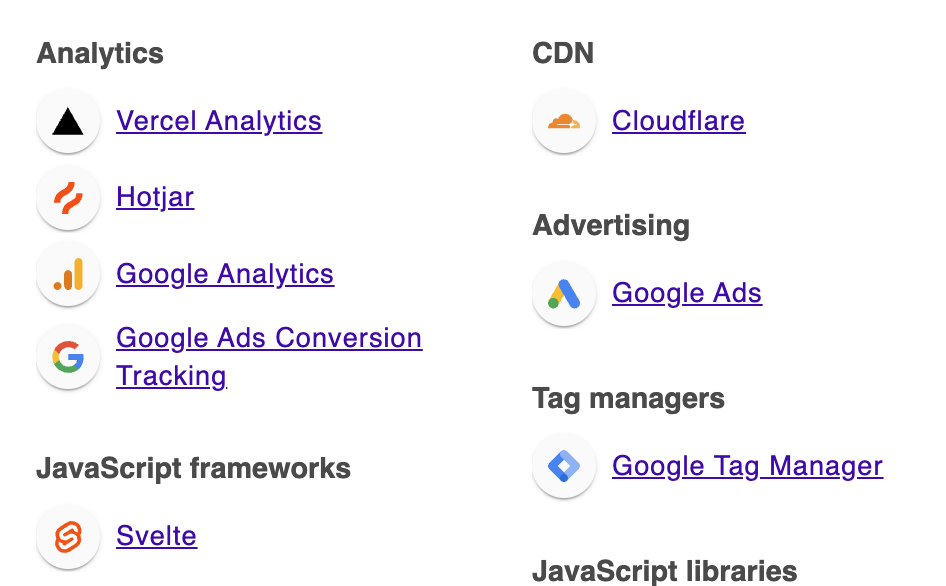
Don’t tell me it’s because they are a startup and don’t have the bandwidth because they do have a fulltime Frontend developer at their company.

I understand if some people can’t do better than that, yet the basic-bitch shadcn/ui starter pack hosted on Vercel, yeah all but inspires anything but scammy hype startup fueled by VC money.
Looking more into their online presence, I wasn’t even able to properly understand if they’re bittensor or some other company. Sounds like a rushed thing overall with no clear ownership and only a few videos here and there on YouTube with no real person to even talk to.

I guess you can Discord or Twitter DM them. :woman_shrugging:t2:

So far, the best I saw is a tweet saying

trust me bro, we really do not train on any personal data fr fr

Let’s assume it’s correct, so then…how about their sustainability?
I do understand how Hetzner is making money. Meanwhile, when that kind of startup runs out of VC money, what happens?
Not sure you can survive a team of 11 people on kofi donations.
Hm, I guess there are other ways those kind of companies could make money then. Like…selling data?

If not, the VC board will come some time soon anyway to juice them out of their funds.
Otherwise, not sure how is their stack and if they do own their own hardware + how are stable/independent are they, but what happens if some companies or components crank up their prices?
Will they be able to eat the blow?

I mean, if raising the prices to your customers is the way to go, then no problem.
Not a stable solution in anyway but it would at least be respectful yet very brittle.
It’s not what I saw from similar companies in the industry (especially AI) so far.

Hence yes, I do trust a random company to have less incentive and things to prove because they do have a stable running business with a reputation to hold.
Some random guys on Twitter that created their thing 15 months ago, sorry to say: have a bit more things to prove still.
But hey, it’s my own skepticism and feel free to just trust them blindly, not my problem after all[2]. :+1:t2:

In terms of ratio, we’re far from a majority overall.
I never heard of chutes.ai before that day. Doesn’t mean that marketing matters for street-cred or that it’s a proof of anything sure, but eh they also do not shine by being a silver bullet that’s unique in their own genre.

Maybe I’m wrong and fine with that tbh, but I guess I am mostly just fed up with those kind of startups popping left and right with only bold claims + abstract futuristic starter pack visuals to hype hype.
It’s just like those 20 new database startups every year pretty much, tiresome and not very useful. :grinning_face_with_smiling_eyes:

Just the sad reality of your local bro not being able to deliver the same amount of tokens/s as Altman.
Am I happy about it? No.
Do I like that some people are trying to move the needle? Yes.
Is it enough and worth the jump? Not sure it is meaningful enough just yet.

I think nobody is blind enough to see that AI is pushing rich people to juice the least privileged with unequal weapons. Not sure what is the way to fight against but embracing some AI middleman startup is maybe not the way yet. And hey, it’s fine if we do not have a cool alternative to that problem just yet, in time we probably will. :+1:t2:


Okay, on this one. :joy:

So, I do see things with those levels:

  1. you use AI in a casual way, eh the basic answers from Brave, DuckDuck or else are just enough to get you what you’re looking for
  2. you need a bit more and don’t care about privacy, you can sell your soul to the myriad of companies just selling you dreams
  3. you’re privacy conscious and do care about running something local while being tech-savvy
  4. you need more and feel like exporting the compute to some VPS/cloud function or alike for more raw power, yet nothing like 1.5TB of RAM
    • even better, you eat the bullet and just build something bulky as described above by @deimos, something that is realistically prosumer accessible
  5. you have the needs for >1TB of RAM, at this point you’re probably more concerned by security rather than privacy
    • or you do have government funds to build such a thing on-prem
    • or you’re just raising money from VC by building hype/FOMO/FUD or whatever tool :crab:
  6. you can use an actual deterministic software tool to get a problem solved with old school tech, no AI fanciness
  7. you realize that rather than pouring (M/B/T)-illions :money_with_wings: into some nonsense, you could have maybe just hired a professional freelance or team to solve/create/build the actual thing rather than brute-forcing it with the wrong approach whatsoever

So…given all of this. On which level are we talking here?
I’m not sure how/why you would use GLM-5 in a personal context[3] because again:

  • if it’s for work, your thing being code, automation or whatever probably doesn’t need to be private
  • if it’s for personal use, I mean idk what are your “needs” with that kind of stuff, but hey feel free to enlighten me on what I’m missing out on here :grinning_face_with_smiling_eyes:
  • business? you should have the money for that kind of hardware/infra because you did some market study and know you can succeed

The last point is definitely something that you can pay 15k€/month, just one business expense like any other that you will turnover by selling something to offset that cost. :+1:t2:
For other needs, self-hosted or paying for Anthropic/whatever will do just fine.

So the realistic choice for most people who actually need capable AI for work is: spend thousands on hardware for a self-hosted setup that still can’t match frontier models

AI is unfair.
Might not be needed.
If it’s a need, pay for it or accept it not being 100% private.
Not all kind of work is compatible, no magic solution either, what do you want me to say here? :man_shrugging:t2:

For some reason, people 3 years ago were still able to do their job just fine.
What have changed? Curious to know in which field AI is gamebreaker if not used.

Even nowadays, some people still “NEED” to have a Bugatti to show up at a client’s meeting to sell them a house.
Others just do fine without any and drive their old rusty Ford.
Not sure how they manage those poor people without a fancy car, guess they just found ways without. :face_savoring_food:


Didn’t meant it in that way. :light_blue_heart:
I’ve just been a victim myself of FOMO/FUD from Twitter where I felt like I was missing out and needed something. Taking a detox cleared up my mind and I don’t really care nor am sad about any of this “gold rush”.

I mostly realized that if you’re exposed for long enough to some stuff, you then kinda start thinking like it is an actual need. While nah, it’s just daily brain-washing that gets into your brain. Hence why I was feeling like asking to take a step back and rethink if you couldn’t achieve your job without spending thousands on a VPS. :mending_heart:

Like I’m no Bezzos either but eh, the whole thing is just Web3/NFT nonsense back again to me, quite an obvious one. I’m not into get-rich-quick scheme either, just learned how to distance myself from all of that. :grin:

Same here, I’m a Developer during work hours so I basically am forced to use it for productivity reasons as of lately. :grinning_face_with_smiling_eyes:
I don’t really care about privacy in the context of working on a company’s codebase tho.
Like realistically what’s my threat model or ownership on a company owned laptop? :joy:

It was quite new to me and I found it funny.
Never told anybody to buy anything or alike.
I didn’t buy anything myself because I don’t need that but could maybe be useful/fun for others?
Meanwhile yes, having a scarf or fancy hacker hoodie is less of a problem: I consider that wearing organic cotton as a lesser evil than uploading data to some startup.

Is it BS? Maybe, I don’t really care that much.
I will still be able to wear and use it offline while feeling like a sexy boomer. :joy:

Was never my intention.
I mostly explained why I felt like the Venn diagram of privacy + cheap-enough + ownership is a weird need to have. But hey, maybe I’m just stranger to how AI impacted some jobs.


Regarding myself personally

I won’t comment or explain my own choices to a new account, not worth my time.
95% of my thoughts are already online publicly and you can investigate further if you wish to have some answers to your criticism regarding my own choices, answers to them are out there already. :slightly_smiling_face:
No need to link my own posts tho :laughing:, I’m very well aware of what I’m saying and cautious of what I’m typing on my computer, yet not hiding lots.

Wouldn’t share it on a public crawl-able forum otherwise.


  1. from what I saw, almost everybody has an amazing product that solves some concrete problems ↩︎

  2. you asked for opinions after all, feel free to disagree :grinning_face_with_smiling_eyes: ↩︎

  3. assuming you do not do anything shady ↩︎

I’ll try to be structured about it because there’s a lot to unpack here and I want to be fair and objective. I’m sorry if you think I’m not always achieving that :heart:. I like to believe you want to actually help me and I am thankful for that :heart: even though I have to remark some of your comments feel a bit immature.

So it’s not specifically about how long you’ve been alive but it’s also about what you did in that timeframe.

Fair point and I agree. But you’re kind of making my argument for me here? Chutes has a working product on OpenRouter with 19 models available, processing hundreds of billions of tokens monthly (855.1 billion tokens in the last 30 days) . This makes them bigger than competitors you probably know like Mistral, Grok, DeepSeek, Azure, Cerebras etc. They have a public GitHub org, named team members with defined roles, published architecture docs, and they’ve been shipping consistently since 2024. That’s not “bold claims + abstract futuristic starter pack visuals.” That’s a working product at scale with measurable output. You can disagree with their approach but pretending they haven’t done anything in their timeframe is just not accurate.

Meanwhile, when I do visit chutes.ai, I am greeted with this amazing stack of tracking in every direction.

I mean yeah, fair criticism on the tracking. I’d love to see them clean that up and it’s a very valid thing to point out on a privacy forum. But judging a backend AI inference platform’s privacy posture by their marketing website’s tracker count is like judging the security of BitWardens Password Manager by checking if their website includes trackers (Spoiler: It does). The product is the API and infrastructure, not the landing page. Their frontend dev should fix it, sure, but it doesn’t tell you anything about how they handle your inference data.

trust me bro, we really do not train on any personal data fr fr

Look, I get the skepticism on “trust me bro” claims. But you’re selectively ignoring the actual technical mechanisms I’ve been talking about this entire thread. I’m starting to wonder if you just don’t understand them. TEE/confidential compute isn’t a tweet. It’s a hardware-enforced isolation boundary that even the provider can’t peek into (if implemented correctly of course). Chutes themselves literally list “TEE/Secure Compute” as a product category. You can evaluate the implementation, sure, but dismissing the entire concept as “trust me bro” is intellectually lazy when the whole point of TEE is that you don’t have to trust the operator.

Let’s assume it’s correct, so then…how about their sustainability?

This is actually the first solid point you’ve made imo. Sustainability and business model matter for any provider you depend on. But Chutes isn’t running on kofi donations. Once again I don’t know where you got that from… Sometimes it seems like you’re making arguments without even thinking just for the sake of it. They operate as Bittensor’s top subnet (Subnet 64), with multiple revenue streams: subscription tiers (Base, Plus, Pro, Enterprise), pay-as-you-go per-token billing via TAO or fiat, invoiced enterprise clients, and private compute instances. Revenue is auto-staked back into the network to reward the GPU miners who provide the compute. It’s a decentralized compute marketplace, not a VC-funded “move fast and figure out monetization later” play. You’d know this if you spent 5 minutes looking into how they actually work instead of assuming they’re a scam because their website uses shadcn. And yes, the site looks like a mass produced shadcn template. You know what that tells you? That the people building it are probably backend and infra engineers, not designers. Anyone who’s worked in IT knows the meme: when a frontend dev goes fullstack nothing works, when a backend dev goes fullstack the website looks like shit or very basic. Chutes is clearly the latter. The infrastructure works, the API works, the models work. The marketing site looking generic is the most backend-engineer thing imaginable. But I get it, if you judge tools by how pretty their landing page is rather than what’s running under the hood, I can see how you’d end up skeptical. Not everything that shines is gold though, and not everything that looks plain is worthless.

I’m not sure how/why you would use GLM-5 in a personal context

You built this entire argument around my GLM-5 example as if I said everyone needs to run it locally??? Whats going on? I was making a cost analysis point to show that the “just use a VPS” advice you keep casually tossing around falls apart once you need anything beyond a toy model. You yourself acknowledge “AI is unfair” and “if it’s a need, pay for it.” Great, so then we agree that for capable models, people need cloud providers, and evaluating which cloud provider has better privacy practices is exactly the kind of conversation a privacy forum should be having. Which is literally what I started this thread to do before you derailed it into “everything is equally bad so why bother.”

And honestly, I’m getting tired of having to argue for a company I’m not even entirely sold on myself. I’m still skeptical about Chutes. I came here to have that conversation, to poke holes, to evaluate them critically. But when the counter-argument is just “everything is a scam, nobody cares, don’t even bother looking” then I end up defending them by default just to push back against the doomerism. That’s not a productive dynamic. I was taught growing up that if you don’t have anything constructive to add, it’s better to just not say anything. I came here looking for actual technical feedback on AI privacy, threat models, provider comparisons, implementation analysis, and instead got paragraphs of philosophical doomerism about how the whole field is a VC scam. That’s a lot of time spent writing to essentially say and do nothing useful (by both of us).

For some reason, people 3 years ago were still able to do their job just fine. What have changed?

According to the U.S. Bureau of Labor Statistics, software developer employment is projected to grow 17.9% through 2033, with AI cited as both a driver of demand and a key productivity tool. The World Economic Forum (small side note: fucking hell what is this timeline where I’m citing WEF) reports 65% of developers expect their role to be redefined in 2026 toward architecture and AI-enabled decision-making. The Stanford AI Index 2025 documents consistent 10-25% performance gains across knowledge tasks like writing, research, and programming. These aren’t marketing claims, they’re labor economics data. Three years ago people did their jobs fine without these tools. Doesn’t mean they’re not genuinely useful now.

Even nowadays, some people still “NEED” to have a Bugatti to show up at a client’s meeting

The Bugatti analogy doesn’t land mate. A Bugatti and a Ford both get you to the meeting. A 7B quantized model running on a €184/month Hetzner GPU and a SOTA model are not comparable outputs. One regularly hallucintes on basic tasks and the other can do complex multi-step reasoning, code generation, and analysis that actually matches the quality bar my work requires. This isn’t vanity, it’s a capability gap. You as a developer should understand this better than most (and I’m pretty sure probably do but yeah)

I mostly realized that if you’re exposed for long enough to some stuff, you then kinda start thinking like it is an actual need.

And I mostly realized that the same logic applies to privacy nihilism. If you’re exposed for long enough to “everything is a scam, nobody cares about your privacy, all companies are equally awful,” you start thinking evaluating anything is pointless. That’s not healthy skepticism, that’s learned helplessness. And it’s exactly the mindset that benefits the companies that actually are terrible, because if nobody evaluates the differences, the worst actors face no competitive pressure to improve.

I won’t comment or explain my own choices to a new account, not worth my time. 95% of my thoughts are already online publicly and you can investigate further if you wish

So let me get this straight. You spend multiple posts scrutinizing Chutes’ website trackers, their team size, their business model, their shadcn starter pack, their Vercel hosting, their VC funding, and their Twitter presence. But when someone applies the same level of scrutiny to your publicly available posts, suddenly it’s “not worth my time” and “no need to link my own posts”? Then again you literally tell me to “investigate further if you wish” and that your “answers are out there already.” What I found is a pattern of double standards that I think is worth addressing, because it directly undermines the arguments you’re making in this thread.

You don’t get to put someone else’s entire operation under a microscope and then wave away your own contradictions with “I’m very well aware of what I’m saying.” Being aware of your contradictions doesn’t make them less contradictory (but realizing your mistakes is a good first step). If a company you don’t like would do that you’d probably jump at the chance of critizing them.

Your choices are publicly visible so I’ll just note once again what anyone can see: you run a Mac Studio, stream on YouTube, speak at Google tech conferences, use Brave (which has Leo AI built in, you might have disabled that though), and you’re considering Cursor, an AI-powered code editor that sends your code to cloud LLMs for inference, and your previous screenshot is made by CleanShot which is afaik only available for macOS. All while telling me that everyone who finds AI useful has been brainwashed by marketing, and that Google/Apple/Microsoft are all “equally awful.” You don’t owe me an explanation, but the contradiction speaks for itself.

And the startup double standard is still there, and it’s actually worse than I originally thought after looking more into it. You dismiss Chutes as a “random no-name startup” that can’t be trusted. I have to say it once again but when you shared urban-privacy.com on this forum, a company selling anti-facial-recognition clothing with zero peer-reviewed testing data and no published validation against modern FR systems, your response to criticism was “let’s be patient and not kill them already” and “let’s assume their intentions are honest.” This is a company that literally markets their OFLAIN bag to people worried about being tracked at protests, telling them basically “Worried of being trackable – even at protests? Put an end to it!” for €115. They’re selling unproven counter-surveillance products to potentially vulnerable people: protesters, activists, journalists, people in countries where facial recognition is used to identify and arrest dissidents. If that anti-FR clothing doesn’t actually work (and nobody has proven it does), someone at a protest trusting it could face very real consequences. You probably heard what’s happening to protesters in countries like Iran. The stakes for protesters are arguably higher than a cloud AI inference provider, because the failure mode is physical danger, not data exposure. And yet that startup gets “let’s be patient” and “assume honest intentions” while Chutes, which has a working, measurable product processing hundreds of billions of tokens, gets “random no-name scam.” How does that double standard work exactly?

Oh and since you brought up the chutes.ai tracker screenshot: urban-privacy.com runs on Shopify, which comes bundled with its own analytics tracking, third-party cookies, and Google integrations by default :slight_smile:

Was never my intention.

I believe that. But the end result is the same: multiple long posts that amount to “everything is bad, AI is a scam, you’re brainwashed if you disagree, and nobody has a solution so just accept it.” That’s not actionable. That’s not useful for someone coming to a privacy forum trying to make informed choices.

If you genuinely think everything is equally hopeless, I respect that perspective, but I’m not sure what value it adds to a thread specifically asking “how do I use AI more privately.” That’s like going into a thread about what encrypted email prodiver to use and writing an essay about how email itself is fundamentally broken. Nobody asked for that.

Nuance over nihilism. That’s all I’m asking for :frowning: